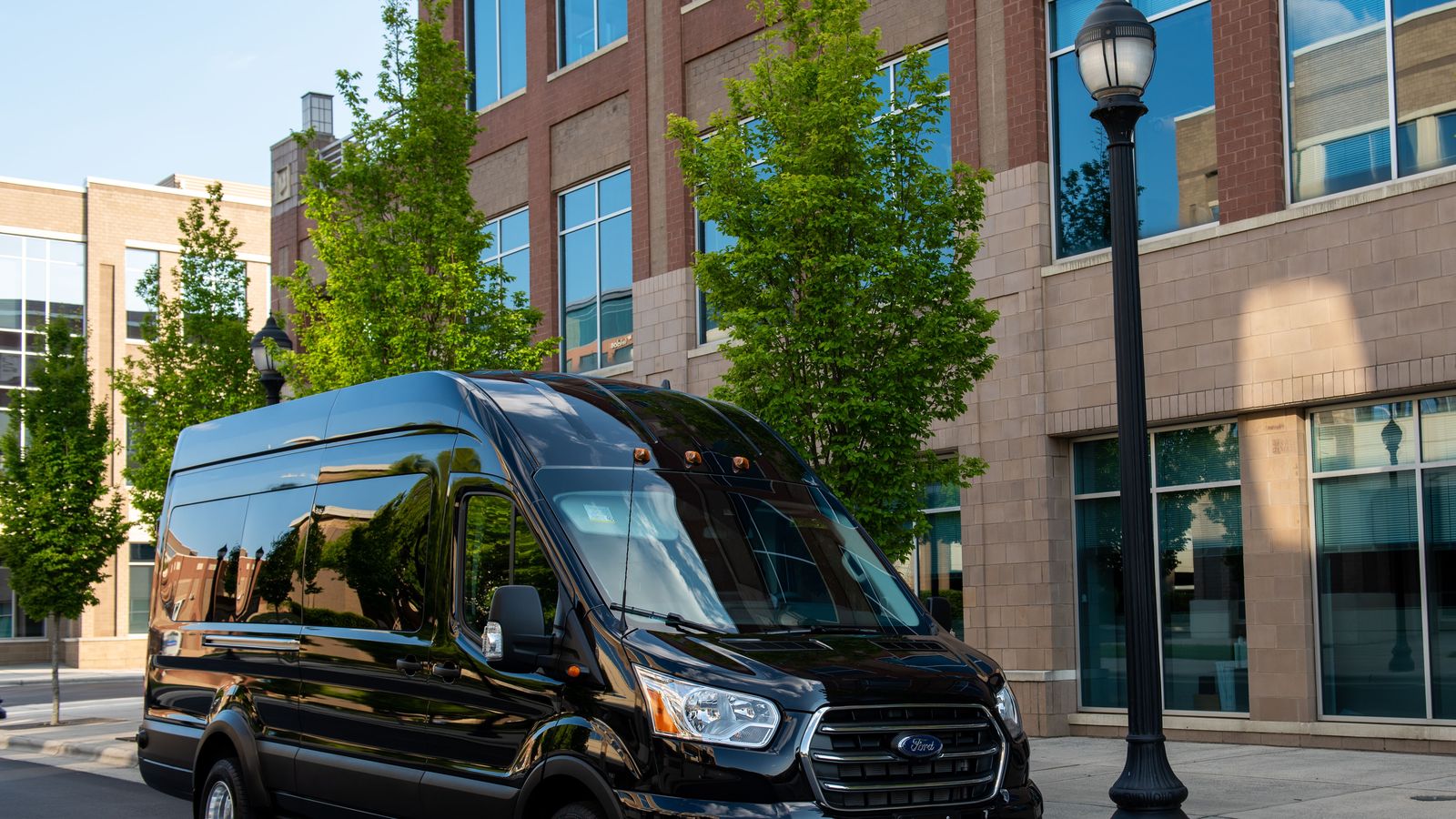














An airport limo bus for a group is usually a chauffeured Sprinter (up to 14 passengers and 14 bags) or, above that, a partner minicoach or coach (24–56 seats) with luggage bays. A Sprinter from Pearson to downtown is a planning figure of about $286–352 one way, or $20–25 each for 14 people. Party buses look similar but have little luggage space and suit nights out, not airports.
Airport limo bus: the vehicle is sized by bags, not seats
The phrase "airport limo bus" covers several different vehicles, and choosing the wrong one is the most common mistake groups make. A party bus with 30 seats may hold only a few suitcases. A 14-seat Sprinter holds 14 people and 14 bags. A full-size coach has large under-floor luggage bays. For an airport run, the luggage decides the vehicle before the headcount does. Our Sprinter group transportation page covers the Sprinter itself in detail; this post is the wider decision guide for group organisers moving 8 to 56 people through Pearson, from choosing between vehicles to the manifest that keeps everyone on the right one.
Which vehicle for which group?
| Group size | Typical luggage | Best option | Planning figure |
|---|---|---|---|
| 7–8 | 1 large bag each | Two executive SUVs or luxury vans | each about 25–30 % above the sedan fare |
| 9–14 | 1 bag plus carry-on each | One Sprinter | about 2.2 × the sedan fare; $225–270/h by the hour |
| 15–20 | 1 bag each | Two Sprinters, or a partner minicoach | Sprinters as above; coach on written quote |
| 21–56 | 1–2 bags each | Partner coach with luggage bays | on written quote |
| 16–36, no luggage | none | Partner party bus, for events only | $330–525/h, 4–5 h minimum |
All planning figures are all-in plus HST. Coaches and party buses are fulfilled through vetted partner operators and priced in writing by a coordinator.
Why a party bus is the wrong airport limo bus
Party buses are built for standing, dancing and lighting, with perimeter seating and little or no luggage space. They work beautifully for a birthday or a bachelorette night, and our party bus and limo bus page covers those. At an airport, the same bus becomes a problem: suitcases block the aisle, passengers cannot sit safely with bags on their laps, and the four-to-five-hour minimum makes a one-hour transfer expensive. If your group wants the party atmosphere on the way to a destination wedding or a stag weekend, book a Sprinter or coach for the airport leg with the luggage, and the party bus for the evening itself.
Sprinter, minicoach or coach: what each is like
A chauffeured Sprinter has individual forward-facing seats, a centre aisle and a rear luggage area; 14 passengers and 14 standard suitcases is its practical limit. It is quick through city streets and fits the regular commercial pickup lanes. A minicoach, typically 24 to 35 seats, adds a proper luggage compartment and a door at the front. A full coach of 47 to 56 seats has under-floor bays that swallow a suitcase per person and more. Minicoaches and coaches are partner vehicles, and at the terminal they load where the airport directs larger vehicles, which the coordinator confirms in advance.
The cost per person at each size
Groups almost always travel more cheaply per head than individuals. From Pearson to a downtown hotel, the business sedan band is $130–160. A Sprinter at about 2.2 times that is roughly $286–352, which for 14 passengers is $20–25 each before HST, less than most individual fares and a fraction of 14 separate rides. Two Sprinters for 28 people cost twice that and still land at the same per-person figure. A partner coach for 50 is quoted in writing, and on longer runs, such as Pearson to Niagara Falls or Muskoka, it is usually the cheapest per head of all. Our rates page lists the sedan bands the Sprinter multiplier applies to.
Building the manifest: the document that saves the day
Every group airport transfer should start with a manifest, a simple spreadsheet the coordinator and chauffeur both work from:
- Passenger names and a mobile number for each.
- Flight number, airline, terminal and scheduled arrival or departure time.
- Checked bags and carry-ons per person, plus oversize items: instruments, sports gear, wheelchairs.
- Pickup and drop-off addresses, including hotel names and entrances.
- The group leader on the ground, with a number that works on arrival.
- Children and the car seats they need.
- Any passenger needing mobility assistance.
Send the manifest when you book, and update it as flights change. Without it, the chauffeur is guessing; with it, a 40-person arrival runs like a scheduled service.
When the group lands on several flights
Conference delegates, wedding guests and sports teams often arrive on different flights over several hours. There are three ways to handle it. Wave pickups assign a Sprinter to each cluster of arrivals within about an hour of each other. Individual cars for stragglers, such as a sedan for the two people landing at midnight, avoid holding the whole group. A single coach with a hold point only works when flights land within a tight window. The chauffeur tracks every flight on the manifest, and the included waiting runs 60 minutes from the actual landing for international flights and 30 for Canadian and US. The coordinator will recommend the mix that costs least without leaving anyone waiting too long.
Departures: getting a group to the airport on time
Departures are easier to control but need a firm call time. Set the lobby meeting 15 minutes before the vehicle's departure time, count bags onto the vehicle, and leave a buffer for the last person. For a group of 40 on a coach, loading luggage alone takes 15 to 20 minutes. Aim to reach the terminal three hours before an international departure and at least two hours before a domestic or US one; US-bound flights clear US preclearance at Pearson, which is slow for large groups checking in together. Confirm the terminal for each airline with our terminal finder: a group split across Terminal 1 and Terminal 3 needs two drop-offs.
Scenario: a destination wedding group returning
Thirty wedding guests return from a Caribbean resort on the same charter, landing at Terminal 3 at 4 p.m. with 45 suitcases, including several large boxes of gifts. Two Sprinters would seat only 28 of them, and not the luggage, so the coordinator books a partner minicoach with a luggage compartment and a Sprinter for the overflow, both going to a hotel in Vaughan where cars are parked. The group leader receives the pickup instructions before departure, the chauffeurs track the charter, and the guests walk out to vehicles that are already waiting. Our family visits and reunions page covers similar large family movements.
Scenario: a school band with instruments
A school band of 22 students and 4 chaperones flies from Pearson to a festival, carrying cases for drums, brass and a keyboard. The instruments decide everything: they need a vehicle with a real luggage compartment, so the coordinator books a partner coach rather than two Sprinters. The chaperones supply the manifest with each student's name and a parent contact, and a signed list of who is aboard is checked before the doors close. No stops are made that are not on the plan. For student groups, ask any operator for its CVOR number, the provincial safety registration for buses seating 10 or more, and check its safety rating yourself.

Scenario: a corporate incentive group of 40
An incentive trip lands 40 sales staff on two flights 50 minutes apart, heading to a hotel downtown and then to Niagara the next day. The coordinator books two Sprinters for the arrivals, one per flight, so the first group is not held for the second. The next morning a single partner coach takes all 40 to Niagara Falls and back, with a winery lunch in Niagara-on-the-Lake. Company branding is not needed on the vehicles; a name board in the arrivals hall, added as meet and greet, makes the group easy to find. The account is invoiced once through our corporate travel arrangements.
Longer group runs: Niagara, Muskoka and across the border
Groups do not always stop downtown. Wedding guests head to Niagara-on-the-Lake, hockey teams to tournaments in Barrie or Kitchener, and incentive groups to Muskoka resorts. On these longer runs, the per-person advantage of a large vehicle grows, because one chauffeur and one vehicle cover a distance that would otherwise need five or six cars. A Sprinter from Pearson to Niagara Falls runs about 2.2 times the $345–420 sedan band, roughly $759–924, or $54–66 each for 14 people before HST. Coaches for larger groups are quoted in writing. Cross-border group runs to Buffalo or New York need every passenger's travel documents checked before departure, because a single traveller refused entry holds the whole vehicle at the border; our cross-border limo to the USA page covers the requirements.
Accessibility for groups
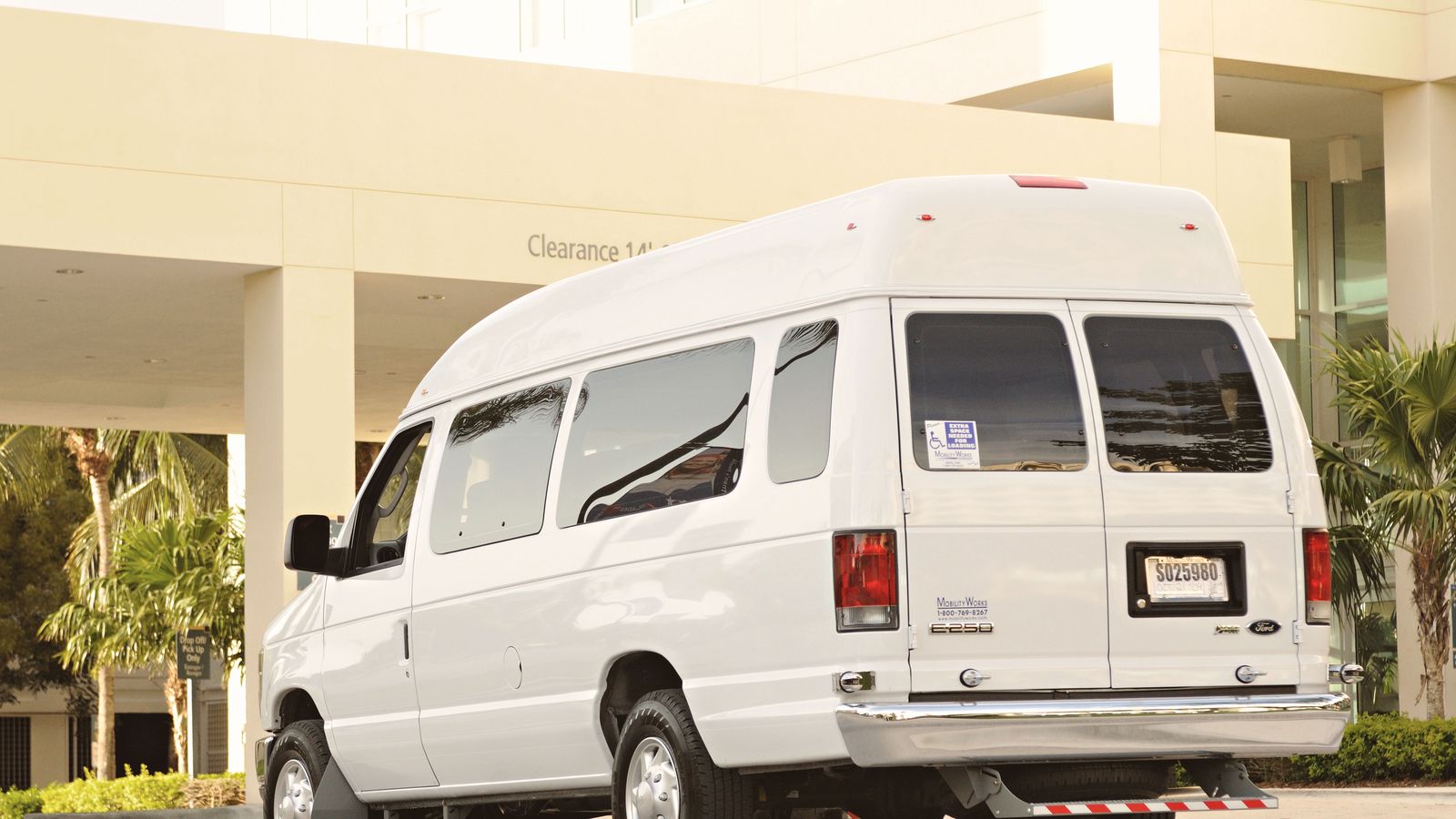
If any traveller uses a wheelchair or cannot manage the steps of a coach, tell the coordinator when the manifest is sent. A Sprinter's step is lower than a coach's, and some operators have lift-equipped vehicles, but they must be requested in advance. In a mixed group, the most comfortable option is often to put the passenger who needs assistance in a separate accessible vehicle travelling with the group, rather than struggling at the coach door. Our wheelchair accessible transfers page explains what is available. Airline assistance inside the terminal is arranged separately with the airline.
Mistakes group organisers make
- Booking by seat count and discovering at the curb that the bags do not fit.
- Choosing a party bus for an airport run because it "seats 30".
- Holding a whole coach for one delayed flight instead of adding a sedan for stragglers.
- Sending the manifest the night before, with half the flight numbers missing.
- Forgetting that a group split across Terminal 1 and Terminal 3 needs two drop-offs.
- Not asking a bus operator for its CVOR number and safety rating.
How to book a group airport transfer
For up to 14 passengers, enter the details in the reservation engine and choose the Sprinter; the fixed fare appears before you confirm. For larger groups, multiple vehicles or coaches, a coordinator prices the plan in writing. Send the manifest as early as you can. Pearson's own ground transportation page shows the terminal access roads, and Toronto Pearson posts construction or curb changes. Cancellation follows our standard tiers: free more than 72 hours ahead, then 10 %, 50 % and 100 % at 72, 48 and 24 hours or less.