













Film production transportation in Toronto is booked by the hour to match call times: a business sedan for talent runs $130–150/h, an executive SUV $160–190/h and a crew Sprinter $225–270/h, 3-hour minimum, all-in plus HST. Airport legs for incoming cast are flat fares, Pearson to downtown $130–160. Series-long programmes are priced in writing to the production office.
Film production transportation in Toronto: where we fit
Toronto is one of North America's busiest production centres, and the City's own Film Office describes a large base of studio space, crews and post-production. Most productions run their own transportation department with drivers for trucks, trailers and passenger vans. We supplement it. Productions call TorontoAirportTransfer.services for the pieces that need a chauffeured car: talent pickups and drop-offs, producers and executives visiting set, airport runs for incoming cast and department heads, and extra crew shuttles when the plan outgrows the unit's own vans.
We work through the production office or the transportation coordinator, not around them. Our chauffeurs take instructions from whoever the production names, keep to the call sheet and slot into the unit's radio or text chain.
Planning fares for productions
Planning figures; the reservation engine quotes exact addresses, dates and vehicles, and a coordinator prices season-long or multi-vehicle work in writing to the production office.
| Booking | Planning figure | Typical use |
|---|---|---|
| Business sedan, hourly | $130–150/h, 3 h min | Actor pickup, day player runs |
| First-class sedan | about +50 % on sedan | Lead cast, visiting executives |
| Executive SUV, hourly | $160–190/h, 3 h min | Cast with wardrobe bags, winter nights |
| Sprinter, hourly | $225–270/h, 3 h min | Crew shuttle to basecamp or unit move |
| Pearson to downtown | $130–160 sedan, flat | Incoming cast and crew |
| Pearson to Hamilton area | $195–240 sedan, flat | Location work west of the city |
Overtime past the booked hours is billed in 15-minute blocks at the same rate. Fuel, chauffeur and gratuity are inside the price; HST is separate.
Crew call times and the reality of a shooting day
A shooting day does not start at nine. Call times of 5 or 6 a.m. are normal, night shoots can wrap after sunrise, and the call sheet for tomorrow often arrives late this evening. Our dispatch runs 24/7, so a pickup confirmed at 10 p.m. for a 4:30 a.m. call is ordinary work.
Chauffeurs on production bookings receive the relevant part of the call sheet: the pickup, the location or studio, the crew parking or basecamp instructions and the contact on set. They arrive early, text the passenger on arrival and wait. If the call time moves, the transportation coordinator messages dispatch and we move the car; we do not ask the actor to rearrange their morning.
Studio districts: the Port Lands, Etobicoke and beyond
Much of Toronto's stage space sits in two clusters. The Port Lands, east of downtown and south of Lake Shore Boulevard, is home to Pinewood Toronto Studios and other stage complexes; access is off Lake Shore and Commissioners Street, and trucks and trailers make the local roads slow at unit call. In the west end, Cinespace Studios operates a large campus on Kipling Avenue in Etobicoke, a short drive from the 427 and Gardiner and well placed for Pearson arrivals.
Beyond those, productions use stages and converted industrial buildings across the city and the wider GTA, and plenty of shooting happens on location. We plan each studio run from the production's gate instructions, since stage lots have their own check-in and parking rules that differ from building to building.
Location days and unit moves
Toronto stands in for many cities, so location work can mean a downtown street closed under a City permit, a house in Leaside, a lakeside park, or a farm an hour north. The City's Film Office handles location permits and road closures; our job is to know where the unit base is and how to get talent to it without driving through the shot.
On a unit move, where the whole company relocates mid-day, a Sprinter can carry crew between locations while talent follows in sedans. Chauffeurs check the day's map, stay off closed streets, and park where the locations team says. We do not idle a car in a background plate.
Talent transfers and discretion
Talent cars are about calm. The actor gets the same chauffeur each day where possible, the car is clean and quiet, the temperature and music are as they prefer, and nobody asks for photos or autographs. The chauffeur does not discuss the production, the storyline or who else is in the cast, with anyone.
For well-known talent, the coordinator can arrange pickups at a private entrance or garage, keep the actor's name off any placard, and brief the chauffeur on the route home that avoids fans outside the location. Where a production has a formal non-disclosure agreement for vendors, we review and sign it before the first booking.
Airport runs for incoming cast and crew
Guest cast, directors and department heads often arrive from Los Angeles, New York, London or Vancouver days before their first call. Every airport pickup is flight-tracked with 60 minutes of waiting included on international flights and 30 on Canadian and US from actual landing. The flat fare covers curbside pickup at Pearson's commercial pickup area; for talent we usually recommend meet and greet in the arrivals hall at a planning figure of $25–35, so they are never searching the curb. Our Pearson airport limo page explains the terminal procedures.
For cast arriving from the United States who are working in Canada, immigration paperwork is the production's responsibility, and the time it adds at the border varies. We simply keep watching the flight and wait.
Crew shuttles to basecamp
When crew parking is far from set or a location has no parking at all, productions run shuttles from a crew lot to basecamp. Our Sprinter group transportation fits that work: 14 seats, room for backpacks and small kit, and a chauffeur who loops on the production's schedule. For larger crews, two Sprinters or a partner coach can be priced in writing.
Crew shuttles also help on night shoots, taking people back to a central point after wrap when transit has stopped. See our page on employee and crew shuttles for recurring shuttle arrangements.
Winter and night shoots
Toronto productions shoot through winter, and cold-weather days change transportation. Cars arrive a little earlier, run the heat for talent waiting between set-ups when the production asks, and carry winter-tire traction for location roads that are not ploughed. Night shoots add fatigue risk for crew driving themselves home; a wrap shuttle removes it.
We watch forecasts and Ontario 511 for road conditions on location days outside the city, and tell the coordinator early if a run up a rural road looks doubtful.
Producers, executives and visiting studio teams
Studio and network executives visiting set often need a car for a full day: hotel, studio, location, dinner and back. The hourly chauffeur service is the right booking, with the chauffeur waiting near basecamp while they watch a few set-ups. For executives flying in and out the same day, we can combine the Pearson legs and the set visit into one quote.
Invoicing and production paperwork
Productions need clean paper. We invoice to the production company with the show title or a code name, and can add episode, block or department codes to each booking. Each line shows date, passenger or department, vehicle, hours and HST separately. Purchase orders are welcome, and production accountants get a weekly statement during principal photography if they prefer.
Provincial incentives for film and television are administered by Ontario Creates; your accountant will know which transport costs count as eligible spending, and our invoices are itemised so they can make that call.
Confidentiality on set
Productions guard scripts, locations and cast lists. Our chauffeurs follow a short set of rules: no photographs of the set, sides, cast or crew; no social posts about the booking; no sharing of the location or the show's working title. Sides or scripts left in a vehicle are returned to the production office, not to anyone who asks for them.

How to book for a production
For single runs, book through the reservation engine with the call-sheet details in the notes. For recurring talent cars or a block of shooting, send the transportation coordinator's contact, the shooting schedule, the studio or location addresses and the talent or crew list, and a coordinator returns a written plan and price, usually within a business day.
Choosing vehicles for cast and crew
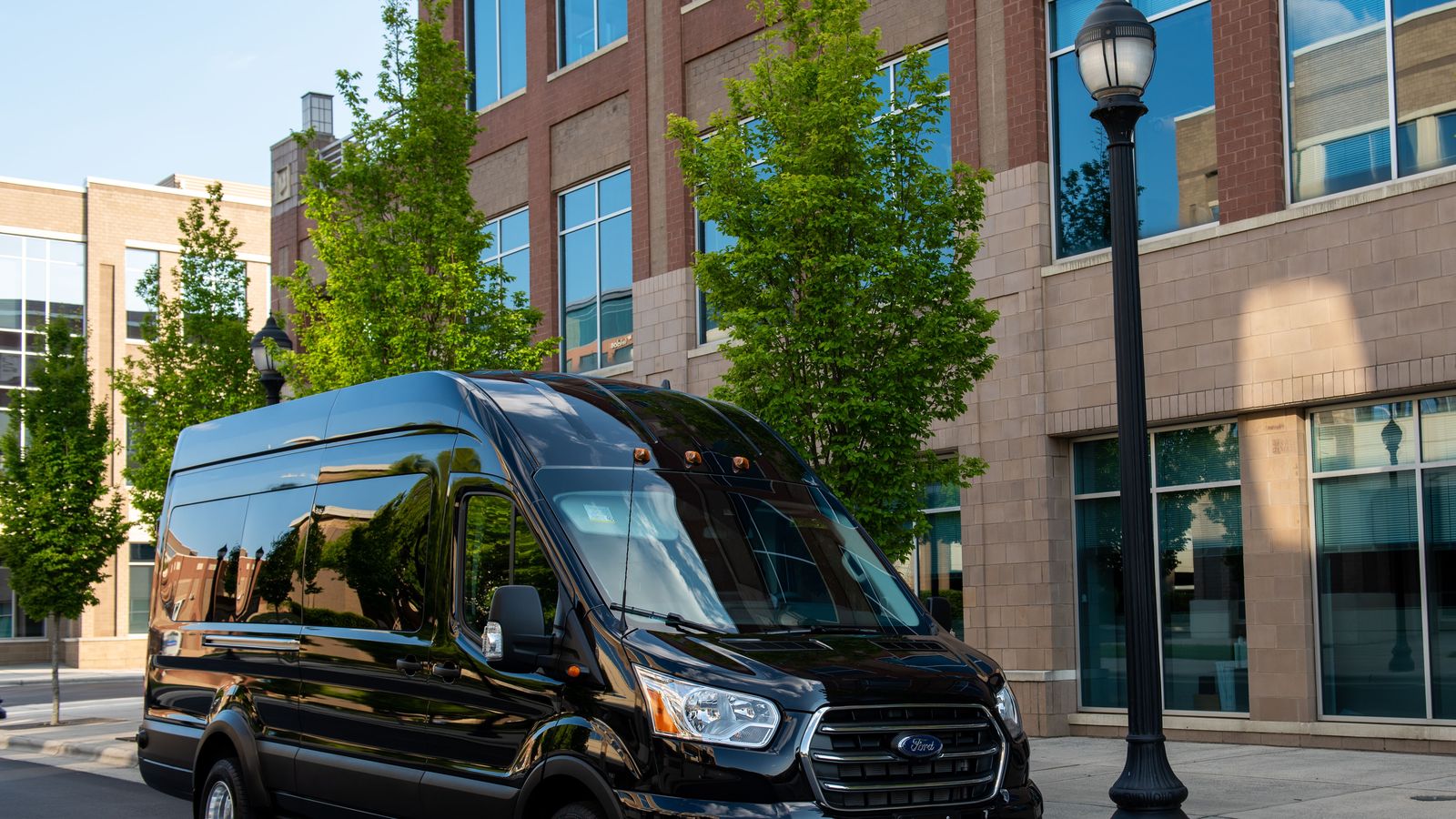
Match the vehicle to the passenger and the day. A business sedan is the default for a day player or a single actor with a small bag. A first-class sedan suits series leads and visiting executives who spend a lot of time in the car on the way to a distant location. An executive SUV handles winter better on rural location roads and carries wardrobe bags, a dog or a child and a guardian without crowding. A luxury van is useful for a small department moving between stages with equipment; a Sprinter covers crew groups up to 14.
We keep the fleet classes consistent across a shoot, so the actor who liked yesterday's car does not find a different model at 5 a.m. See the fleet for the full list of classes and capacities.
Minors on set and family travel
Productions with young performers have extra rules about supervision and working hours, set by the production and the applicable agreements. Our part is simple: a child performer always travels with the parent or guardian the production names, car seats are fitted where the child needs one, and the chauffeur never hands a child over to anyone not on the production's list. Add seats at booking; see child car seat transfers for the seat types we fit.
Out-of-town locations and long days
Some productions shoot in small towns, farmland or cottage country for the look. A talent car to a location two hours north makes a long day longer, so we plan chauffeur rest to Ontario's rules and, if the day runs past a safe limit, swap in a fresh chauffeur rather than push one person through a sixteen-hour shift. Distance runs to places such as Hamilton, Guelph or Barrie are quoted by the hour or as flat fares from the rate card.
Hold time and turnaround
Talent cars often wait while an actor finishes in hair and makeup or a scene runs long. Waiting is part of the hourly booking, and the chauffeur stays with the car. When turnaround between wrap and the next call is short, we keep the same chauffeur only if their own rest allows it; otherwise dispatch assigns a fresh one for the morning.
Cancellation when the schedule changes
Schedules change with weather, availability and the director's day. The sitewide rule applies per vehicle, measured from scheduled pickup: more than 72 hours out, no charge; 72 hours or less, 10 %; 48 hours or less, 50 %; 24 hours or less or a no-show, 100 %. For season-long programmes the written agreement can set a different notice rule suited to how the production actually schedules.