













On a limo ride to the airport, expect the chauffeur to arrive a few minutes before the booked time, load your bags, confirm your airline and terminal, and drive a pre-planned route to the departures curb. Your part: be ready at the pickup time, declare the real number of bags, say which terminal you need, and keep valuables with you. Gratuity is already included in our fares.
Most advice about chauffeurs focuses on tipping. Tipping is covered in detail in our chauffeur tipping and etiquette guide; this post is about the trip itself when the destination is a departures curb and a flight will not wait. A limo ride to the airport is a small operation with a hard deadline, and the courtesies on both sides are really about protecting that deadline.
A limo ride to the airport, from booking to curb
The ride starts well before the car arrives. When you book, the reservation engine asks for the pickup address, the flight number, the number of passengers and bags, and any child seats. Dispatch uses those details to pick the vehicle, plan the route and set a pickup time that leaves enough margin for traffic, check-in and security. The evening before, the chauffeur reviews the job, checks the weather and road conditions, and fuels the car. On the day, the car is positioned near your address early. The whole routine is designed so that the only decision you make is to walk out of the door at the booked time.
When should the car collect you?
Work backwards from the flight. Pearson's own advice for departures is on Toronto Pearson's site, and our how early to arrive at Pearson guide sets out margins by flight type. As a rule of thumb, aim to be at the terminal two hours before a domestic flight, three hours before a US or international flight, then add the drive with a buffer. From downtown that is 25 to 45 minutes at quiet times and more at rush hour; from Oshawa or Burlington, allow over an hour. If you are unsure, tell us the flight and dispatch will suggest a pickup time.
| Time | What happens on a 7:00 a.m. flight to Vancouver from North York |
|---|---|
| Evening before | Confirmation and chauffeur details arrive; you check the terminal |
| 4:15 a.m. | Chauffeur parks near your home and checks flight status |
| 4:25 a.m. | A short message that the car is outside, if you asked for one |
| 4:30 a.m. | Booked pickup; bags counted into the trunk |
| 4:35 a.m. | Depart via Highway 401 west and 409 to Pearson |
| about 5:00 a.m. | Departures curb at your terminal; bags out, you check in |
What the chauffeur does on arrival
A chauffeur arrives before the pickup time, parks where it is legal and safe, and waits by the car. They do not lean on the horn, ring the bell repeatedly or come inside unless you ask for help with heavy bags. If you have requested a message, you get one when the car is outside. When you appear, the chauffeur greets you by name, takes the bags, asks whether anything needs to stay in the cabin with you, and opens the rear door. Before pulling away they confirm the airline and terminal, because Terminal 1 and Terminal 3 at Pearson have separate departures curbs and a wrong guess costs time.
Being ready at the pickup time
The single most useful courtesy is to be ready. For a point-to-point pickup, 15 minutes of waiting are included; after that, time is charged in 15-minute blocks, and more importantly your margin shrinks. Put the bags by the door the night before, keep passports and phones in one pocket, and know who is locking up. If you are running late, message or call dispatch rather than hoping the chauffeur will guess. They can adjust the route or tell you honestly whether the flight is still comfortable. A chauffeur who has been kept waiting 25 minutes will still drive safely; they will not drive faster than the law allows to recover your time.
Luggage: declare it honestly
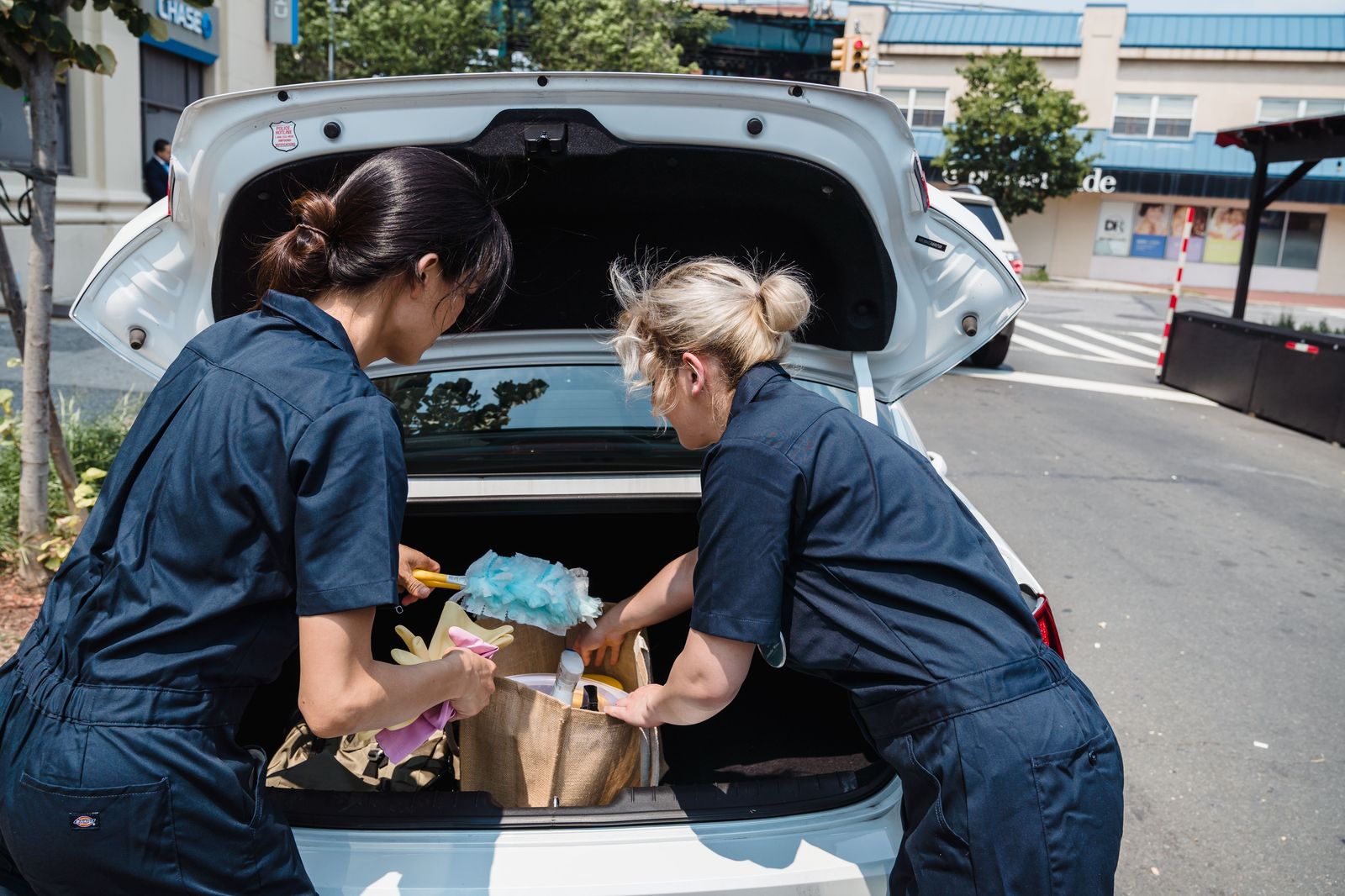
Luggage is where most airport pickups go wrong. A business sedan holds three large cases; an executive SUV or luxury van holds six; a Sprinter holds fourteen. If you booked a sedan for "two bags" and walk out with four suitcases, a car seat and a golf bag, the chauffeur may not be able to close the trunk safely, and a second vehicle costs time you do not have. Count everything, including skis, strollers and hockey bags, when you book. Keep a small bag with passports, medication, chargers and anything fragile in the cabin with you rather than in the trunk.
In the car: comfort and quiet
Once you are moving, the car is yours. A good chauffeur will ask about temperature and music once, then leave you alone. Early-morning passengers often want silence, and that is normal; you do not need to make conversation. Take calls freely; chauffeurs are trained to treat what they overhear as confidential. Water is usually on board. Eating a granola bar is fine; a full breakfast with coffee on light upholstery is best avoided, not because anyone will scold you but because a spill on the way to a flight is nobody's idea of a good start. Seat belts are required for every passenger in Ontario.
Alcohol, smoking and celebrations
Smoking and vaping are not permitted in our vehicles. Alcohol is a different matter from a celebration party bus: on an airport run the answer is simply no open drinks. Ontario's Liquor Licence and Control Act sets the rules for alcohol in vehicles, and a limousine licence does not turn a sedan into a bar. If you are heading to the airport after a wedding or a stag weekend, the chauffeur will be happy to see you relaxed, but keep the bottles sealed and in the trunk. Airport security will be the next stop anyway.
Children, seats and elderly passengers
If children are travelling, add the right seats at booking so they are fitted before the car arrives; infant, convertible and booster seats are available on request. The chauffeur will install them, but parents should check the buckle themselves. For elderly parents, mention mobility needs: the chauffeur can bring the car close to the door, steady an arm at the curb and help with a folding walker. If an airline wheelchair is needed at the terminal, arrange it with the airline in advance; the chauffeur will get your parent to the door and to the check-in area helper. Wheelchair accessible transfers are available where a ramp vehicle is needed.
Changing the plan on the way
Plans change. You forgot a charger, you need to collect a colleague, you want a coffee drive-through. Ask; do not direct turn by turn. The chauffeur will tell you honestly whether a stop fits your flight time and whether it changes the fare. Extra stops and extra waiting are added transparently, not negotiated in the car. What the chauffeur cannot do is change the destination to somewhere the booking does not cover, carry an extra passenger beyond the seats and belts, or break a traffic rule. If you know about a stop in advance, add it at booking so the pickup time allows for it.
At the departures curb
Pearson's departures curbs are for loading and unloading, not waiting. The chauffeur will pull in as close to your airline's doors as traffic allows, lift the bags onto the sidewalk or a trolley, and check the cabin for phones, wallets and passports before you walk away. This is not the moment for a long goodbye, because airport staff keep the lane moving. If someone is seeing you off, say your farewells in the car. If you are unsure which doors belong to your airline, the terminal finder settles it before you leave home.

If something goes wrong
Occasionally a car is delayed by a closure on the 401 or a collision on the 427. Dispatch watches Ontario 511 and live traffic through the night, and if the chauffeur is running late, dispatch calls you rather than letting you watch the clock. If you are not satisfied with anything, say so to dispatch the same day; complaints are easier to fix while details are fresh. Lost items are the most common after-trip issue. Chauffeurs check the car at every drop, but if you realise at the security line that your laptop is on the back seat, call dispatch immediately and the car will return to the curb if it is still close.
Winter mornings and the extra fifteen minutes
Between December and March, a 5 a.m. pickup can mean a car that has been cleared of overnight snow, a driveway that has not, and a 401 running at half speed behind the salt trucks. Chauffeurs build that into their own early start, but passengers can help: clear a path to the door, leave the porch light on and keep boots on until you are in the car. If Environment Canada has a snowfall warning out on weather.gc.ca the evening before, dispatch may call to suggest moving the pickup 15 or 20 minutes earlier. Accept the call; nobody ever missed a flight by arriving early.
Business travellers: small things that matter
If your company is paying, put a cost centre or project code in the booking notes so the receipt matches your expense system. For a group, name a lead passenger who holds the itinerary. For a roadshow, a single booking with several legs keeps the same car and chauffeur. For confidential work, ask for no name board and no company name on anything visible; our corporate car service page explains account options. A chauffeur will never post, share or discuss who they drive.
Gratuity, briefly
On our bookings gratuity is part of the fare, so there is no calculation at the curb. If a chauffeur went beyond the job, for example helping with an unexpected wheelchair transfer or waiting through a long delay, a thank-you is welcome but never expected. With other companies, check the confirmation: some add a gratuity line automatically and some leave it to you.
A quick etiquette checklist
- Book with the flight number, the true bag count and any seats.
- Confirm the terminal the evening before.
- Be at the door at the booked time, documents in hand.
- Tell dispatch if you are running late.
- Keep valuables in the cabin, not the trunk.
- Say goodbyes in the car, not at the curb.
- Check the seat before you step out.
Booking the ride
The reservation engine shows the fixed all-in fare before you confirm, with HST separate. For planning, a business sedan to Pearson runs $130–160 from downtown, $105–135 from North York and $90–120 from Mississauga; the Pearson airport limo page covers vehicles and pickup rules. Cancellation is free more than 72 hours before pickup, then 10, 50 and 100 per cent at 72, 48 and 24 hours or less.