













In Toronto, a taxi can be hailed, found at a stand or ordered by app, and charges a regulated meter (or a zone flat rate from Pearson's own stands). A limo or black car is always pre-booked at an agreed price, with a chauffeur timed to your flight. For short city hops take a taxi; for airport runs with luggage, a schedule or a group, a fixed-fare limo usually wins.
People search "taxi and limo Toronto" because the two blur together: many Toronto taxi firms also run a "limo" line, and many limo companies sell sedans that look a lot like a premium cab. The difference is not the paint. It is how the ride is licensed, how it is priced and how it is dispatched. If you want the full picture of what a booked sedan or SUV includes, our black car service in Toronto page lays out the fleet and fares; this post explains the contrast with a cab so you can choose per trip.
Taxi and limo in Toronto: the short version
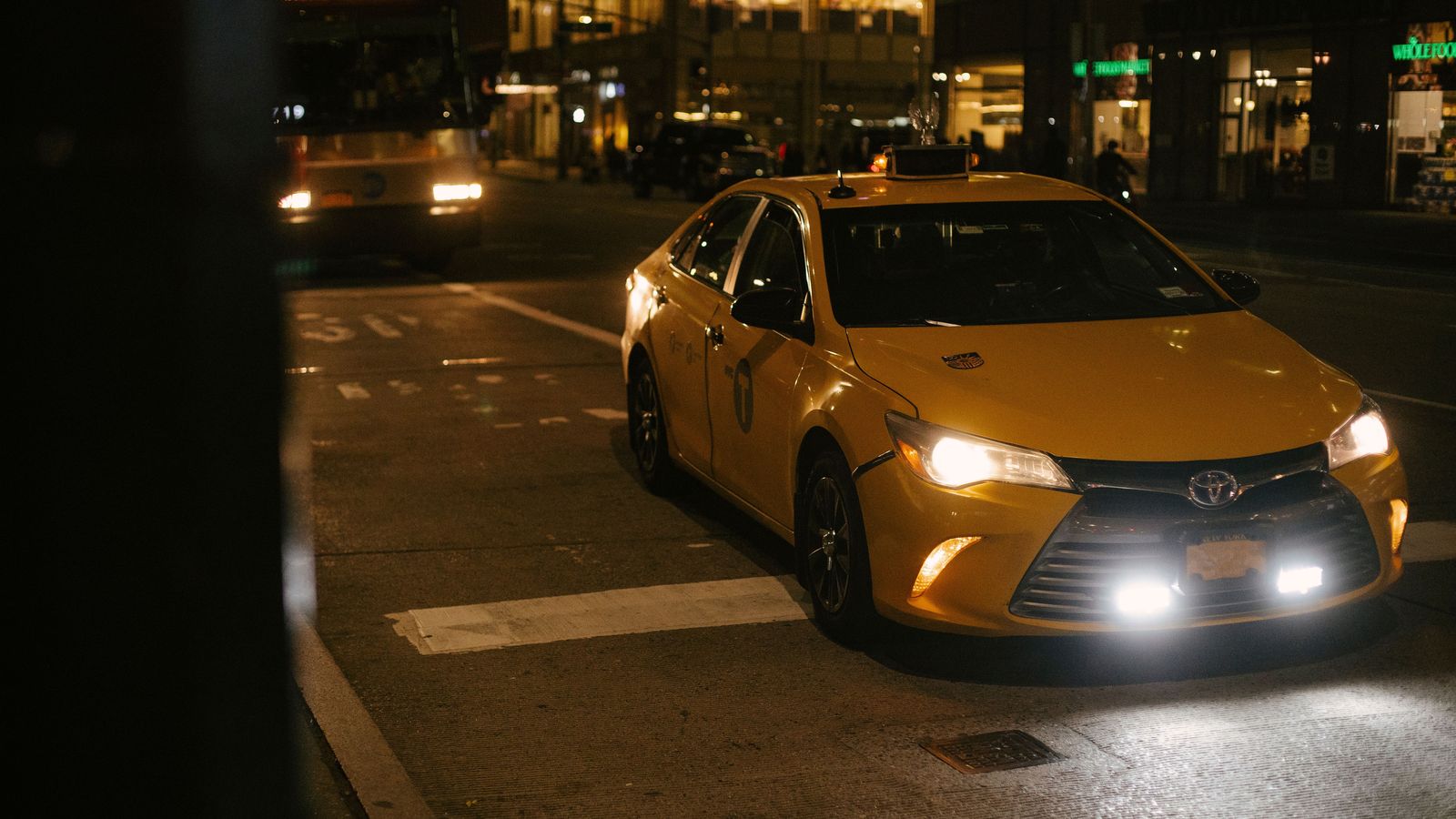
A taxi is an on-demand vehicle. It waits at stands, cruises for hails and answers app requests, and the fare is worked out by the meter as you travel, using rates the City sets. A limousine is a pre-arranged vehicle. It does not take street hails or queue at cab stands; it goes to a booked pickup at a booked time, and the price is agreed before the car moves. In practice that gives each a natural job. A taxi is perfect for a 10-minute ride from a restaurant on King Street to a hotel on Front. A limo, or black car, is built for the trips where the timing, the luggage or the people matter: a 6 a.m. flight, a parent landing from overseas, a client dinner, a wedding.
How are taxis and limos licensed differently in Toronto?
The City of Toronto licenses vehicles for hire under its municipal code, with separate categories for taxicabs, limousines and private transportation companies (the rideshare apps). You can read the categories and the consumer guidance on the City's taxi and limousine page and its vehicle-for-hire licensing hub. The categories carry different rules: taxis may pick up on the street, while limousines work only by prior arrangement. Pearson is a separate case. The airport authority controls who may pick up at its terminal stands, so the cabs and limos that queue there are airport-authorised vehicles, while a pre-booked car like ours collects at the commercial pickup area arranged for booked transportation.
How do you get each one?
With a taxi you stand at a rank, raise a hand or tap an app, and whatever car is nearest comes. The strength is speed when you need a car now. The weakness is that you learn which car, which driver and how clean the trunk is only when it arrives. With a limo you book in advance, online or by phone, and the booking holds a vehicle class, a pickup time, a flight number if there is one, the number of bags and any extras such as child seats. The strength is certainty; the car is assigned before you need it. The weakness is that it is not built for "I need a car in four minutes on Queen Street". A good operator can often dispatch within an hour or two, but planning is the point.
How is the price set: meter or fixed fare?
A Toronto taxi charges by the meter: a starting charge, then distance and waiting time, at rates published by the City. The total depends on the route and the traffic you meet, so a crawl along the Gardiner at 5 p.m. costs more than the same distance at 11 p.m. A limo quotes a fare first. With us, the reservation engine shows one all-in price for the exact address, date and vehicle before you confirm: chauffeur, vehicle, fuel, 407 tolls if used, airport fees and gratuity, with HST shown separately. No meter, no surge. The trade-off is simple: on a short, clear run a meter can come in lower; on a long or congested run the fixed price protects you. Our fare calculator gives planning figures for any GTA address.
What does each cost from Pearson to downtown?
| Option | How the price works | Planning figure to downtown | Notes |
|---|---|---|---|
| Pearson taxi or limo stand | Airport zone flat rate | Varies by zone; posted at the stand | No booking; queue on busy evenings |
| Rideshare app | Dynamic app price | Varies by demand | Designated rideshare zone at the terminal doors |
| Business sedan, pre-booked | Fixed all-in fare | $130–160 + HST | Flight tracked; gratuity included |
| Executive SUV, pre-booked | Fixed all-in fare | about $160–205 + HST | 6 passengers, 6 bags |
| Stretch limousine (partner) | Hourly | $225–330 an hour, 4-hour minimum | For celebrations, not airport logistics |
Our figures are planning figures; the reservation engine quotes the exact address, date and vehicle. Stand rates are set by the airport and posted at the curb, so check them on Toronto Pearson's site rather than relying on a figure repeated online.
What does "limo" actually mean in Toronto?
Most people who book a "limo" to the airport ride in a sedan or SUV, not a stretch. In the trade, "limousine" is the licence and service category: a chauffeured, pre-arranged car. A stretch limousine is one vehicle type inside that category and is mostly used for weddings, proms and nights out. Our own fleet covers business and first-class sedans, executive SUVs, luxury vans and Sprinters; stretch limousines, Rolls-Royce and party buses come through vetted partner operators in the LimousineWorldwide.Directory network, and we say so on the booking. So "taxi or limo" is really "on-demand cab or pre-booked chauffeured car". The fleet page shows each class with seats and bags.
Who drives: a cab driver or a chauffeur?
Both must be licensed and insured for paid passenger work, and plenty of cab drivers are excellent. The job is different, though. A taxi driver's day is a stream of unknown strangers and short trips. A chauffeur's day is a list of named bookings, each with a flight number, a pickup note and a customer who expects a particular routine: bags lifted, temperature asked about, no small talk unless invited, the route briefed before departure. Our chauffeurs follow written standards that come with membership of LimousineWorldwide.Directory and LimousineAssociation.International. The chauffeurs page describes the dress, conduct and vetting you can expect.
How does pickup work at Pearson for each?
At Pearson, airport-authorised taxis and limos load from stands at the arrivals level, and you take the next car in the line. Rideshare pickups use designated zones at the terminal doors. A pre-booked chauffeur waits at the pre-arranged commercial pickup area of the terminal you land at, Terminal 1 or Terminal 3; the fare includes curbside pickup there. If you would rather be met inside the arrivals hall with a name board, meet and greet is an optional add-on, a planning figure of $25–35. The Pearson pickup rules guide walks through each zone so you know which door to use before you land.
What happens if your flight is late?
A taxi stand does not care about your flight; the cab you get is simply whichever is next when you walk out. That is fine if you land on time and fine if you land late. A pre-booked car has to know. We track every airport pickup and time the chauffeur to the actual landing, not the timetable. Waiting is included: 60 minutes from landing on international arrivals and 30 minutes on Canadian and US, then 15-minute blocks if you need longer. For a point-to-point pickup at a home or hotel, 15 minutes are included. A cab has no equivalent promise because it has no booking to keep.
Luggage, groups and the vehicle you actually get
A Toronto taxi is usually a sedan or hybrid with a normal trunk; minivan cabs exist, but you get what the stand or app sends. Three adults with three large cases and a stroller can be a problem. Booking a limo means choosing the capacity: a business sedan takes 3 passengers and 3 bags, an executive SUV or luxury van 6 and 6, a Sprinter 14 and 14. For a family of five landing from a long trip, an SUV at roughly a quarter more than the sedan fare is often close to the cost of two cabs. Groups bigger than a van can use our Sprinter group transportation rather than a convoy of taxis that arrive at different times.
Children and car seats: a real difference
Ontario's car-seat rules exempt taxis and buses for hire, which is why a cab will often take a family without seats. An exemption is not the same as safe. Ontario's guidance on choosing a child car seat explains the stages. We fit a proper seat for every child who needs one, regardless of any exemption: infant, convertible or booster, on request, added at booking, free or a planning figure of $10–15 each. With a taxi you bring and install your own. Details are on our child car seat transfers page.
When is a taxi the smarter choice?
Honestly, often. If you are already downtown, travelling light and going a few kilometres, a cab or the TTC is cheaper and faster than booking anything. If you land at Pearson with one bag, no schedule and nobody to meet, the stand or UP Express is perfectly good; UP Express runs from Terminal 1 to Union Station in about 25 minutes (details on UP Express). The limo earns its price when the trip has fixed points: an early flight, a meeting, a dinner reservation, children, elderly passengers, a lot of luggage, or a destination outside the city where a meter would run for an hour.

Four trips, four answers
without the risk of an app showing "no cars available".
60 minutes of waiting for customs.
coordinator if it is a partner vehicle.
- Solo, downtown hotel to a Liberty Village dinner: taxi. Ten minutes, modest meter, no planning needed.
- Couple, 7 a.m. flight from Oakville: booked sedan, planning figure $120–150 to Pearson, collected at 4:45 a.m.
- Family of five from Heathrow to Markham: executive SUV with two seats fitted; one vehicle, bags included,
- Eight friends to a wedding in King City: stretch limousine or Sprinter by the hour, priced in writing by a
Payment, receipts and gratuity
Toronto taxis take cards and cash, and the tip is added at the end, customarily by the passenger. Our fares include gratuity, so there is no mental arithmetic at the curb; extra thanks is welcome but never expected. Payment is taken at booking and the receipt shows the fare and HST separately, which is what most expense systems want. If you ride on a corporate account, trips can be invoiced together. The chauffeur tipping and etiquette guide covers the customary amounts for cabs and chauffeurs if you are visiting from abroad.
Weather, peak times and the fixed fare
Snow makes the difference between the two sharpest. On a stormy December evening, taxi queues at Pearson lengthen, app prices climb and a meter ticks through the slow crawl on Highway 427. A pre-booked car has already been assigned, its winter tires are on and the fare you accepted in October is the fare you pay. The same applies to TIFF week in September, long weekends and the Friday before Christmas, when every other option is stretched. Check road conditions on Ontario 511 before long drives, and book your car early for those dates.
Mistakes people make choosing between them
all-in number.
- Booking a "cheap limo" found online that turns out to charge gratuity, fuel and airport fees on top. Ask for the
- Assuming a limo means a stretch. If you want a stretch, say so; most airport limos are sedans and SUVs.
- Taking a cab with a baby because it is quicker, then discovering there is no seat.
- Booking a car without a flight number, so nobody knows you are delayed.
- Arranging a pickup inside the terminal without the meet and greet add-on and then searching the wrong door.
How to book the limo side of the comparison
Open the reservation engine, enter the pickup and drop-off, the date and time or flight number, the passengers and bags. Pick a vehicle class and add seats or meet and greet if needed. The fixed fare appears before you confirm, and the chauffeur's details follow before the trip. Cancellation is free more than 72 hours before pickup; 10 per cent applies at 72 hours or less, 50 per cent at 48 hours or less, and the full fare at 24 hours or less or for a no-show. For a price-first view of every GTA city, see the rates page.