













Toronto taxi rates for street hails and cabstand pickups are set by the City: meters start at $4.25 and rise with distance and time. Brokerages may offer discounted rates when you book by phone or app, and app bookings can include surge pricing that must be agreed before the trip. Rides from Pearson's stands use the airport's flat zone rates with taxes included. Tips are extra.
Toronto has several taxi pricing systems running side by side, and which one applies depends on how and where you get in. This post explains the rates across the city, not just at the airport. If your trip is to or from Pearson, the Toronto airport taxi fare guide is the page that compares every airport option and our fixed fares side by side.
Toronto taxi rates: how the City meter works
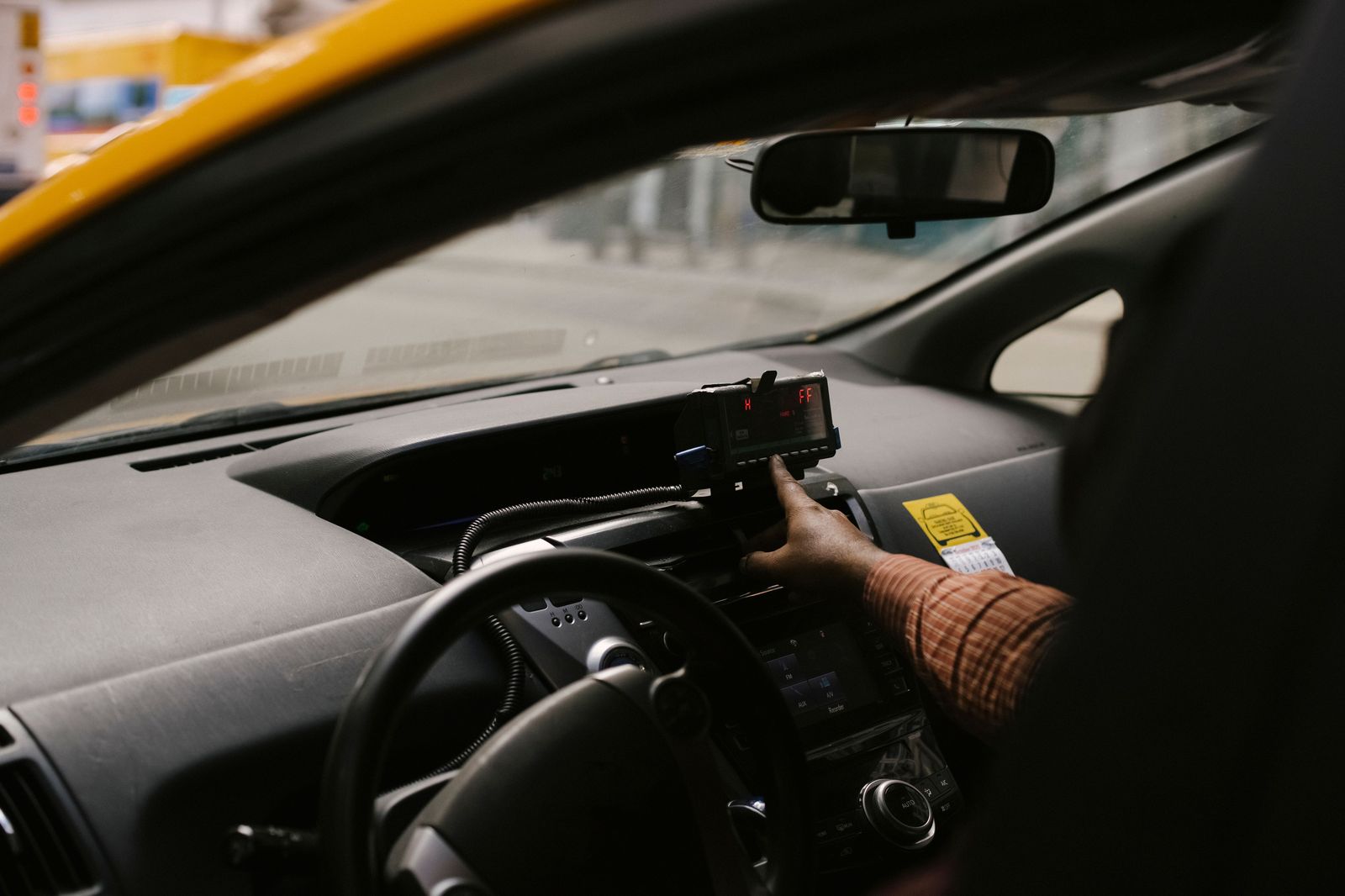
Taxis licensed by the City of Toronto use a regulated meter for street hails and cabstand pickups. The City's taxis and limousines page states that meters start at $4.25 and increase based on distance and time. Third-party summaries of the Toronto Municipal Code describe the increments as $0.25 for each additional 143 metres and $0.25 for each 29 seconds of waiting while engaged; that works out to roughly $1.75 per kilometre while moving and about $31 per hour while stopped. We could not confirm those increments on the City page itself, so treat them as a planning guide and the meter as the authority.
Two things follow from how the meter works. First, a short hop costs more per kilometre than a long run because of the $4.25 start. Second, slow traffic costs money: 15 minutes stuck at a red light on King Street adds to the meter even though you have not moved.
Street hail, cabstand, phone booking and app: four prices for one ride
The City's page separates four ways of hiring a taxi, and they are not all priced the same way:
- Street hail: you wave down a cab. The regulated meter applies.
- Cabstand: you take the first cab at a stand, such as outside a hotel or Union Station. The regulated meter applies.
- Booking through a brokerage: you call or use the company's app. The City notes brokerages may offer discounted rates.
- App bookings with surge pricing: allowed, but the surge must be agreed to before the trip starts, and a detailed receipt must be provided.
In practice this means the same trip from the Eaton Centre to the Distillery District can have a metered price, a discounted booked price and a surge price on the same afternoon.
What does a typical Toronto taxi trip cost?
Using the planning increments above, here is a rough idea of metered fares before tip. Real fares depend on traffic lights, detours and waiting, so these are estimates, not quotes.
| Trip (approximate distance) | Clear roads, estimate | Busy traffic, estimate |
|---|---|---|
| Union Station to the Royal York area (1 km) | about $6-8 | about $8-11 |
| Union Station to Yorkville (4 km) | about $11-13 | about $15-20 |
| Downtown to the Distillery District (3 km) | about $9-11 | about $12-16 |
| Downtown to North York Centre (16 km) | about $32-38 | about $40-50 |
| Downtown to Pearson (27 km) | about $50-58 | about $60-75 |
The last line is the one people search for most: a metered cab to Pearson. The meter's time component is why the same ride varies so much between midnight and rush hour.
Cabstands at Union Station and the big hotels
Cabstands are where the meter is most predictable, because the first car in line takes you and the regulated rate applies. The busiest in the core are outside Union Station on Front Street, at the large hotels along Front, York and University, and near the Eaton Centre. After a GO or VIA arrival, the Union stand can have a queue of passengers rather than cars; walking a block north to hail on York or Bay is often faster. Hotel doormen will whistle up a cab, and a small tip for the doorman is customary. If you are heading to Pearson from Union with a lot of luggage, compare the metered fare with UP Express from the same building, which our Union to Pearson comparison covers.
Pearson's flat rates are a separate system
Rides from the taxi and limo stands at Toronto Pearson are not metered. The airport licenses its own fleet and charges a flat fare by destination zone, with taxes included, no surge and major credit cards accepted. Surcharges apply for five or more passengers and for four or more checked bags or oversize items. Current zones and a fare estimator are on the airport's ground transportation pages. Our line-by-line breakdown of cab fare from Toronto airport to downtown walks through real receipts.
Rideshare prices in Toronto
Uber and Lyft set the fare in the app when you request. Off-peak, an economy ride can be close to or below the metered taxi price; at peaks, around concerts at Scotiabank Arena, in snowstorms or when bars close on a Saturday, it can be much higher. The app shows the price before you confirm, which is a real advantage over an open meter. Larger vehicle classes cost more, and an economy car may not fit two big suitcases.
Extras that change the price
- Waiting: the meter charges for time while you are engaged, including if you ask the driver to wait outside a shop.
- Stops: each stop adds distance and waiting.
- Tips: not included in the meter or in Pearson's zone fare; most riders add 10-20 %.
- Tolls: Highway 407 is tolled electronically. A metered cab that uses it will usually pass the toll on; agree before you set off.
- Large groups and bags: Pearson's stand surcharges are explicit; in the city, a group of five may need a minivan cab, and apps charge more for larger vehicles.
Accessible taxis
Toronto has wheelchair-accessible taxis operating under the same City rules; book one through a brokerage well in advance for time-sensitive trips such as a flight or a hospital appointment. For airport transfers where a ramp or lift is essential, our wheelchair-accessible transfers are arranged ahead with the right vehicle confirmed in writing.

Hourly and long-distance trips: where taxis stop making sense
Taxi meters are built for short and medium trips inside the city. For a day of meetings across the GTA, a run to Niagara Falls or a trip to cottage country, a metered cab becomes expensive and unpredictable because every minute of waiting and every kilometre counts. For those trips a fixed-price or hourly car is usually the better tool. Our hourly chauffeur service uses planning figures of $130-150 an hour for a sedan with a three-hour minimum, and a long-distance fixed fare such as Pearson to Niagara Falls is a $345-420 planning figure for a sedan, all-in, plus HST.
How a booked private car is priced instead
A TorontoAirportTransfer.services booking is not a taxi and is not metered. The reservation engine shows one fixed fare for the exact address, date and vehicle before you confirm. It includes the chauffeur, vehicle, fuel, airport fees, 407 tolls if used and gratuity, with HST shown separately. There is no surge and no meter. For the airport run to downtown, a business sedan is a $130-160 planning figure. It costs more than most metered or zone taxi fares for one or two people; the gap narrows for families and groups, and the fixed fare earns its keep for late arrivals and anyone who needs a child seat or an invoice.
Taxis, limousines and rideshare: who licenses what
In Toronto, taxis, limousines and rideshare drivers all operate under the City's vehicle-for-hire framework, administered through Municipal Licensing and Standards. The rules differ by category. Taxis may be hailed on the street and use the regulated meter; limousines and private-transportation services work by pre-arrangement rather than street hails; rideshare trips are requested through a licensed app. At Pearson the airport adds its own layer, licensing the taxis and limos that serve its stands. Knowing the category tells you how the price will be set before you get in.
Toronto taxi prices by time of day
The regulated meter itself does not change with the clock, but the time component does. A crosstown trip at 3 a.m. with green lights all the way is close to the pure distance price; the same trip at 5:30 p.m. on a weekday can add several dollars of waiting time. The worst windows for the meter are the weekday rush hours, roughly 7 to 9:30 a.m. and 3:30 to 6:30 p.m., Friday evenings in the Entertainment District, and the hour after a Leafs, Raptors or Blue Jays game lets out near Union Station. Rideshare surges tend to cluster in the same windows, plus bar closing on weekends. If you can shift a trip by 30 minutes, the meter and the app both reward you.
A conference visitor's day of taxi fares
Picture a visitor staying at a Front Street hotel and attending a trade show at the Metro Toronto Convention Centre. The morning walk is free. A lunchtime cab to a client in Yorkville is a few kilometres on the meter; a late-afternoon cab back in traffic costs noticeably more for the same distance. Dinner in Little Italy and a ride back after 10 p.m. is quick and cheap. Add the airport runs at each end and the week's taxi bill can surprise an expense report. Teams attending conventions and trade shows often book the two airport legs as fixed fares and use cabs or transit in between.
Complaints and overcharges
If you think a City of Toronto taxi overcharged you, note the plate number; the City asks for it before it can act on a complaint, which is made through 311. The same channel covers short-fare refusal and vehicle condition. Disputes with Pearson's airport-licensed taxis go to the airport. Keep your receipt either way.
Five tips for paying the fairest taxi price in Toronto
- For a known trip, ask the brokerage for a booked price before the cab arrives.
- Avoid the meter's time charges by travelling outside rush hours when you can.
- Compare the app price with a stand or booked price at peak times, not after you have requested.
- For trips from Pearson, check the official zone fare before you reach the stand.
- For groups of four or more with bags, compare one larger vehicle against two cabs.
Where this leaves airport travellers
For most airport trips, the choice is between a Pearson stand taxi, a metered or app cab going to the airport, rideshare and a booked car. Our flat-rate taxi alternative to Pearson explains the booked option, and the fare calculator gives a planning figure for any address in seconds.