








The Eglinton Crosstown, Line 5, does not reach Pearson. It runs under and along Eglinton Avenue between Mount Dennis and Kennedy, linking with Line 1, Line 2 and GO, so it can shorten the first leg of a transit trip to the airport from midtown or Scarborough. You still need UP Express, the 900 bus from Kipling or a car to reach the terminals; a westward extension towards the airport is a later project.
For years Eglinton Avenue was a construction site, and for years people asked us the same question: once the Crosstown is built, will it take me to the airport? The short answer is no, not directly. The longer answer is more useful, because the line does change how some travellers reach Pearson, and it changes very little for others.
This post looks at the Crosstown from the point of view of someone with a flight to catch: where the line goes, how it fits into a transit trip to the terminals, how many changes that means with a suitcase, and when a car from midtown, Leaside or Scarborough is still the simpler choice.
What the Crosstown is
Line 5 Eglinton is a light rail line along Eglinton Avenue, running underground through midtown and on the surface further east, between Mount Dennis in the west and Kennedy in the east. It links with Line 1 at Cedarvale and at Eglinton, with Line 2 and the Stouffville GO line at Kennedy, and at Mount Dennis with the rail corridor used by Kitchener line trains. Check the TTC for current hours, station details and any service changes, and the City of Toronto for news on future transit projects.
Does the Crosstown go to Pearson?
No. The western end is at Mount Dennis, near Weston Road, still some distance from the airport. A westward extension along Eglinton towards Renforth Drive, close to the airport's southern edge, is a separate, later project, and how it would connect with the terminals is a question for the future. For now, a traveller on Line 5 heading for a flight has to change to something else: UP Express, a subway line towards Kipling and the airport bus, or a car.
How it fits into a transit trip to the airport
The Crosstown is most useful as a feeder. These are the realistic transit paths from three places along the line, with planning ranges from boarding Line 5 to Terminal 1 and the number of changes involved.
| Starting point | Likely path | Changes | Roughly, to Terminal 1 |
|---|---|---|---|
| Yonge and Eglinton | Line 1 south to Union, then UP Express | 2 | 1 h to 1 h 15 min |
| Leaside (Laird) | Line 5 to Eglinton, Line 1 to St George, Line 2 to Kipling, 900 bus | 3 | 1 h 15 min to 1 h 35 min |
| Golden Mile (Pharmacy) | Line 5 to Kennedy, Line 2 west to Dundas West, walk to Bloor, UP Express | 2 | 1 h 20 min to 1 h 40 min |
Changes at Mount Dennis to a westbound train on the Kitchener corridor may suit some riders, depending on which GO and UP Express trains call there; check the operators before planning around it. Our posts on the GO Train and Pearson, the Weston and Bloor UP Express stops and Kipling and the 900 bus explain each connection.
Who gains the most
The biggest winners are people who live along Eglinton but away from Yonge: Forest Hill, Fairbank, Leaside, the Golden Mile and the neighbourhoods between Victoria Park and Kennedy. Before, they started an airport trip with a slow surface bus; now the first leg is a train that reaches the subway quickly. Riders in the east who used to ride buses down to Line 2 can now cross to Line 1 or reach Kennedy faster. For a light traveller with a midday flight, that is a genuine improvement.
Visitors gain too. Someone staying with family in Fairbank or at a hotel near Yonge and Eglinton can now reach Line 1 and the rest of the network without a slow bus first, which makes a day downtown or a trip to Union easy. For the flight home with a full case, the same visitors still tend to book a car, because the last leg to the terminal is the same as it ever was.
The transfer count problem
Every change is a staircase or an elevator, a walk along a platform and a wait for the next vehicle. With a backpack, three changes are a nuisance. With two large suitcases and a child, they are the trip. The Crosstown does not remove changes for airport travellers; for some it adds one. That is the honest trade-off, and it is why many people along Eglinton use transit for the daily commute and a car for flights. If you do use transit, travel outside rush hour, check elevator status before leaving and give yourself an extra half hour.
What it means for driving to Pearson
Eglinton Avenue itself is a direct road to the airport's south side: drive far enough west and it passes the 427 near the airport's edge. From Forest Hill or York, chauffeurs sometimes use it when the 401 is badly jammed. Most of the time, though, the fastest line from midtown is the Allen Road or Avenue Road up to the 401, then west to the 409 or 427. From Leaside and Don Mills, the Don Valley Parkway to the 401 is usual; from Scarborough, the 401 west all the way. Our guide to getting to Pearson from anywhere in the GTA covers the main routes.
Midtown, Leaside and Scarborough: car fares and times
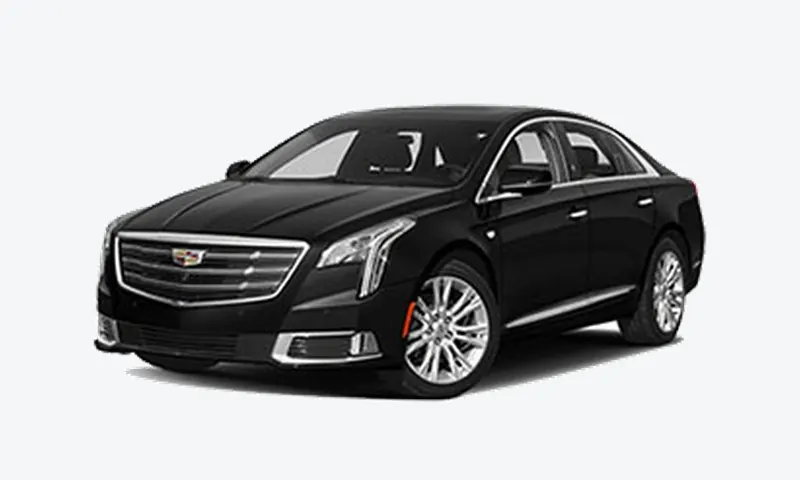
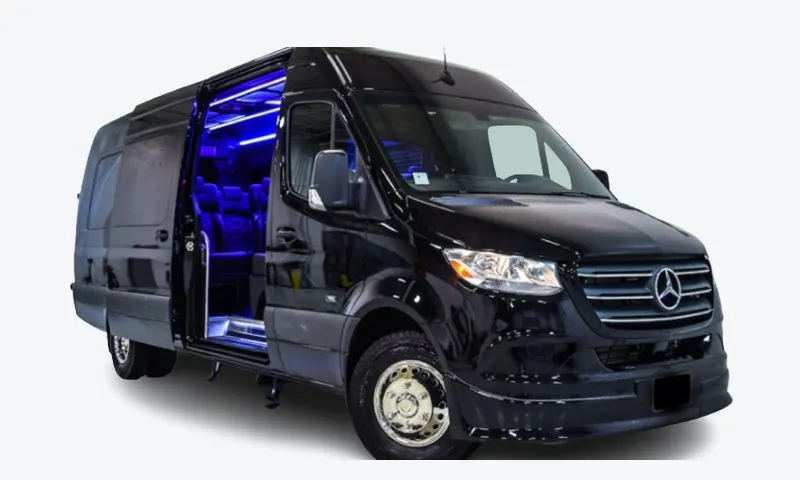
These are planning fares from Pearson for a business sedan and an executive SUV, before HST, fixed and all-in. Addresses between bands, such as midtown streets near Eglinton, get an exact quote from the reservation engine.
- Downtown: $130–160 sedan, $165–205 SUV; 25 to 45 minutes at quiet times. See the downtown Toronto page.
- North York: $105–135 sedan, $135–175 SUV; 20 to 40 minutes. See the North York page and our North York taxi versus car service comparison.
- Scarborough: $145–175 sedan, $185–225 SUV; 30 to 50 minutes. See the Scarborough page and our Scarborough taxi versus limo post.
Rush hour can add 20 to 40 minutes to any of these. The fare does not change with traffic, because nothing is metered and there is no surge.
Arriving home on a late flight
Late arrivals expose the limits of any transit chain. If your flight lands at 11:30 p.m. and the passport line is long, you may reach the UP Express platform close to the last convenient connections, then face a Line 5 or subway transfer near closing time. A booked car removes the guesswork: the chauffeur tracks the flight, waits 30 minutes from landing on domestic and US flights and 60 minutes on other international arrivals, and meets you at the terminal's commercial pickup area when you text that you have your bags. For an early departure instead, some midtown travellers prefer to stay at the airport the night before; our post on an airport hotel before an early flight weighs that up.
A worked example: a Leaside couple and a Scarborough student
Grace and Tom live near Laird and Eglinton. For a weekend in Halifax with carry-ons, they ride Line 5 to Eglinton, take Line 1 to Union and UP Express to Terminal 1, about an hour and a quarter with two changes, which suits them on a Saturday morning. For a two-week trip to Japan with large cases, they book an executive SUV for a 3:30 p.m. pickup; the chauffeur takes the Don Valley Parkway and the 401, and they are at the Terminal 1 curb about 40 minutes later.
Wen, a student near Kennedy, flies home at the end of term with one large case. Line 5 is not on her route at all: she rides Line 2 west to Dundas West, walks to Bloor station and takes UP Express, a trip with two changes and no stairs she cannot manage. For the first trip each autumn, with three cases, her parents book a car instead.
Booking a car from anywhere along Eglinton
The reservation engine quotes a fixed, all-in fare from any address along the line to either terminal, with HST shown separately and flight tracking, airport fees and gratuity included. The rates page lists planning fares by area, and neighbours further north and east can read Markham to Pearson. If you are visiting midtown rather than leaving from it, our post on Casa Loma and midtown with a driver shows how a half day works. For a car that waits for you rather than the other way round, book online; you can also check UP Express times if you are comparing the two.