









No GO Train stops at Toronto Pearson. The rail link to the airport is UP Express, which runs from Union Station to Terminal 1 with stops at Bloor and Weston, both also served by Kitchener line GO trains. Riders on every other GO line travel to Union and take UP Express back out. A few GO bus routes serve the terminals directly, and Malton GO is nearby but not walkable.
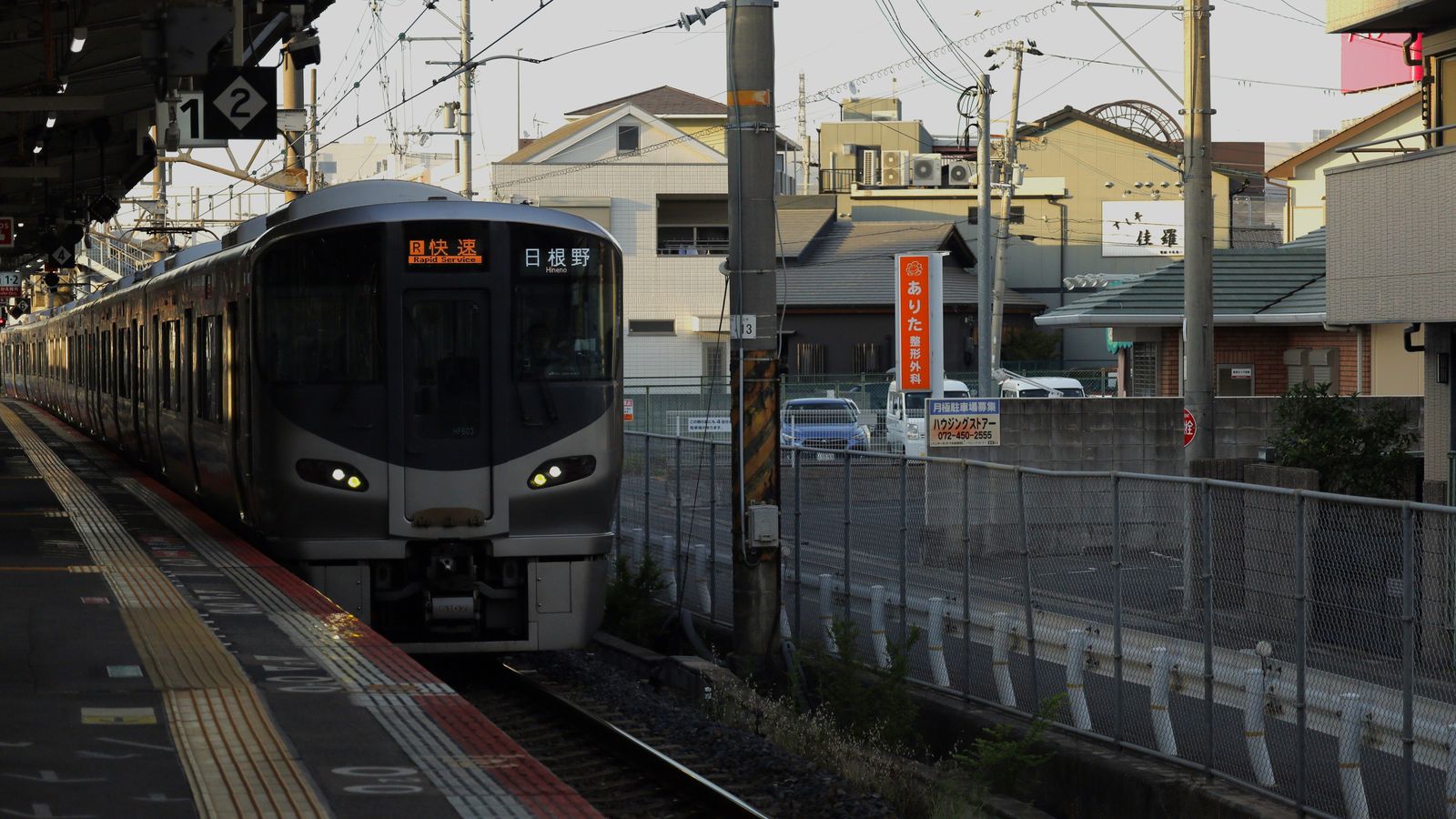
Look at a map of the GO network and the Kitchener line seems to brush past the airport. Malton station is only a few kilometres from the runways, and trains to Brampton and Georgetown roll along the edge of the airport lands every day. It is natural to assume you can ride GO to your flight. You can get close, but not to the door, and the gap matters when you are carrying a suitcase.
This guide sets out, line by line, what actually connects GO riders with Pearson, how long it takes in practice, and when a car from your home station or your front door is the simpler answer.
Why there is no GO station at the airport
The terminals sit in the middle of the airport lands, well away from the rail corridor. When a rail link was finally built, it took the form of a dedicated spur that leaves the Kitchener corridor and climbs to a station inside Terminal 1. That spur is used by UP Express, the airport train, not by GO trains. So the practical question for a GO rider is always the same: where is the easiest place to get from my GO train onto UP Express, or onto a bus or car that reaches the terminal?
The Kitchener line: change at Weston or Bloor
Kitchener line riders have the best of it. GO trains on this line stop at Bloor and Weston, and UP Express stops at both, so you can change trains without going downtown. Coming from Brampton, Bramalea or Georgetown, you ride east to Weston and take UP Express back west to the airport, a short backtrack that is still faster than continuing to Union. Coming from the west end of Toronto, Bloor is the natural change. Our post on the Weston and Bloor UP Express stops covers both stations in detail, including the walks between platforms.
The catch is frequency. GO service on the Kitchener line is more frequent at rush hour than at midday, evenings and weekends, while UP Express runs roughly every 15 minutes through the day. A missed connection can mean a long wait on the GO side. Check the trip planner on GO Transit's site for your exact time, not a typical one.
Every other GO line: Union and back out
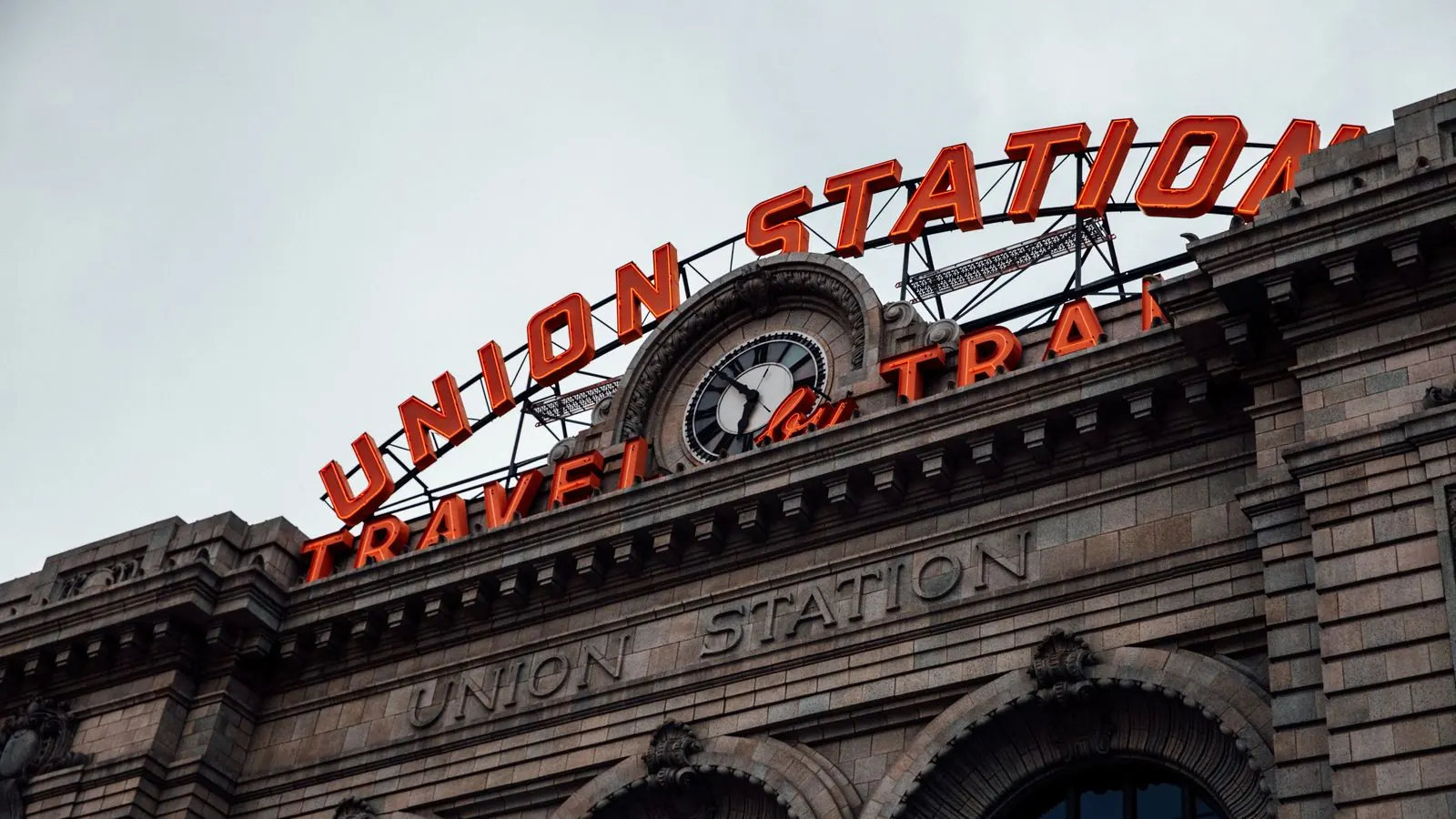
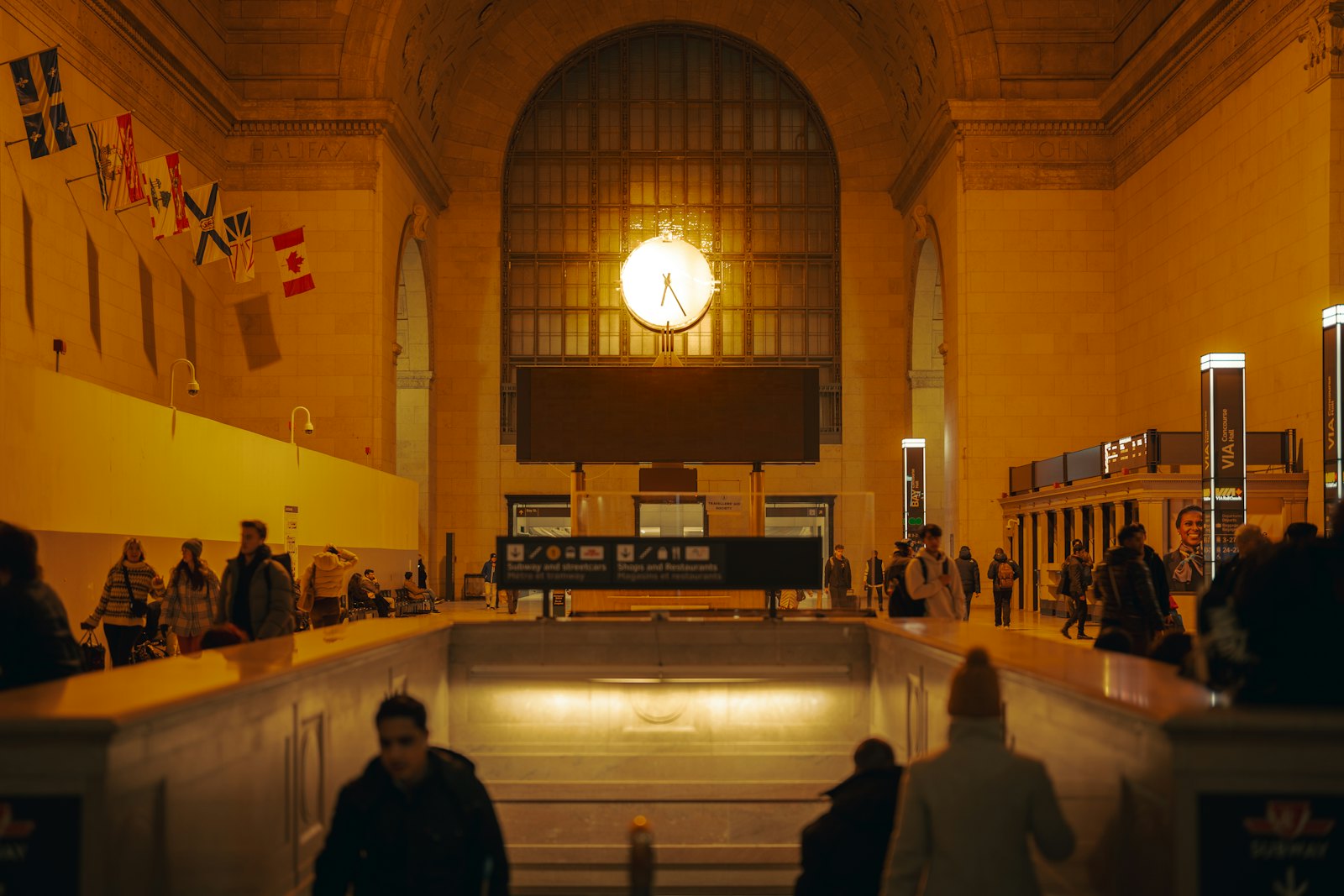
For Lakeshore West, Lakeshore East, Milton, Barrie, Richmond Hill and Stouffville riders, the rail route to Pearson runs through Union Station. You ride all the way downtown, walk to the UP Express platform and ride 25 minutes or so back out to Terminal 1. It works, and plenty of people do it, but from Oakville or Oshawa you travel east or west for most of an hour only to double back. These are planning ranges from boarding at the GO station to stepping off at Terminal 1, with a normal connection.
| GO line | Where to change | Station to Terminal 1, roughly | Honest verdict |
|---|---|---|---|
| Kitchener (Brampton, Georgetown) | Weston | 45 min to 1 h 15 min | Good for light travellers |
| Lakeshore West (Oakville, Burlington) | Union | 1 h 15 min to 1 h 45 min | Workable, with a backtrack |
| Lakeshore East (Pickering, Whitby, Oshawa) | Union | 1 h 20 min to 2 h 5 min | Long with bags |
| Milton | Union | 1 h 25 min to 1 h 50 min | Check train times closely |
| Barrie, Richmond Hill, Stouffville | Union | 1 h 15 min to 2 h 15 min | Usually better by car |
Add the time it takes to get to your home station and park, plus the walk at Union. For a full comparison of the downtown leg, see UP Express versus a car from Union.
What about Malton GO station?
Malton is the GO station closest to the airport, and that is exactly why it confuses people. It sits a few kilometres from the terminals on the far side of airport roads and industrial streets, with no walkway and no shuttle of its own. From Malton you would need a taxi or a local bus to reach Terminal 1 or Terminal 3. For a passenger with luggage it is rarely worth it: a change at Weston gets you onto a train that pulls in under the terminal roof.
GO buses that reach the terminals
A small number of GO bus routes do serve Pearson directly, linking the airport with parts of Peel, Halton, York Region and Hamilton. Buses have space for luggage underneath, and for some suburban trips a single GO bus is simpler than two trains. Routes, stops and timetables change, and some run only at certain times of day, so check the current routes for Pearson on GO's site before you count on one. Toronto Pearson's own site also lists the public transit that stops at each terminal. Our post on the bus to Pearson versus a private car covers the trade-offs.
Fares, PRESTO and the UP Express transfer
GO and UP Express both accept PRESTO and contactless payment, and paying that way is usually cheaper than buying a paper ticket. Fares and any discounts for combining the two change from time to time, so check each operator's site on the day rather than relying on an old figure. Two points stay true: a family of four pays four rail fares, and a car fare is per vehicle, not per person. That is why the maths often flips once two or three people travel together, as our comparison of the train, taxi, rideshare and a limo shows.
Luggage and stairs: the part the trip planner leaves out
Journey planners count train minutes. They do not count the walk from a GO platform at Union to the UP Express platform, the elevator queue with a stroller, or the Terminal Link train if your flight leaves from Terminal 3. With two large cases, allow 10 to 15 minutes for the change at Union and five or more at Weston. Early flights add another wrinkle: the first GO trains of the day may not reach Union in time for a 6:00 a.m. departure, and UP Express has its own first train. Check both before you plan a dawn run by rail.
When a car from your GO station makes more sense
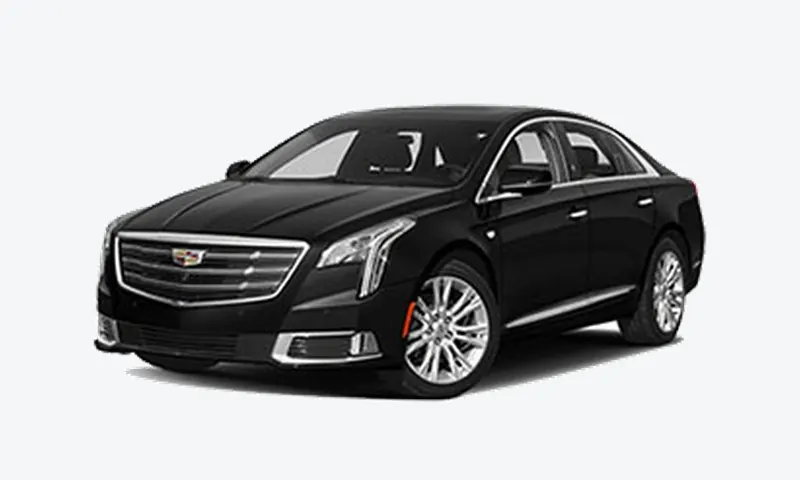
A car is the better answer when you are travelling early, travelling as a group, or carrying more than you can lift up stairs. Planning fares from Pearson for a business sedan, before HST, include Brampton $100–130, Oakville $120–150, Milton $130–160, Whitby and Oshawa $220–265 and Barrie $265–315; the rates page has the full list. Every fare is fixed and all-in, with 407 ETR tolls, airport fees, flight tracking and gratuity included. If you are a Kitchener line commuter, see Georgetown and Halton Hills to Pearson; Lakeshore West riders should read Oakville GO station to Pearson, and Milton line riders Milton to Pearson airport.
Two worked examples: a student and a family
Priya, a student at Bramalea with a backpack and one carry-on, has an afternoon flight to Vancouver. She takes a Kitchener line train to Weston, changes to UP Express and is at Terminal 1 in under an hour. For her, rail is the right call, and we would say so.
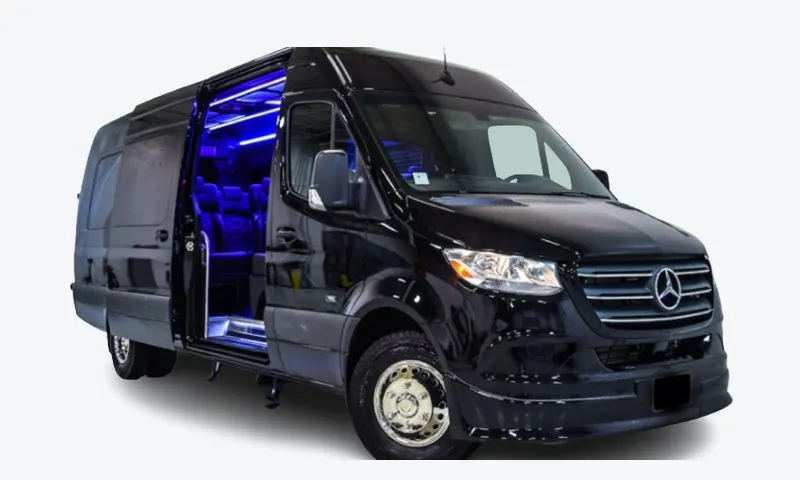
The Okafors, two adults and two children in Whitby, have a 7:00 a.m. domestic flight from Terminal 3 with five suitcases. By rail they would need a very early Lakeshore East train, a change at Union with five cases and two sleepy children, then the Terminal Link. Instead they book an executive SUV at $280–340 before HST, collected at their door at 3:45 a.m. and at the Terminal 3 curb a little after 4:40 a.m. via the 401 and 427. The Whitby and Oshawa page covers that run, and Oshawa station pickups work the same way for anyone arriving by GO or VIA.
Booking a car from your station or your door
The reservation engine quotes a fixed fare from any GO station or home address to either terminal at Pearson, with HST shown separately. For arrivals, the chauffeur tracks your flight and waits 30 minutes from landing on domestic and US flights and 60 minutes on other international arrivals. If you are also curious about the newer rapid transit lines, our posts on Kipling station and the TTC and the Eglinton Crosstown cover the city side. When you are ready, book your car and pick the terminal on the Terminal 1 or Terminal 3 page if you are unsure.