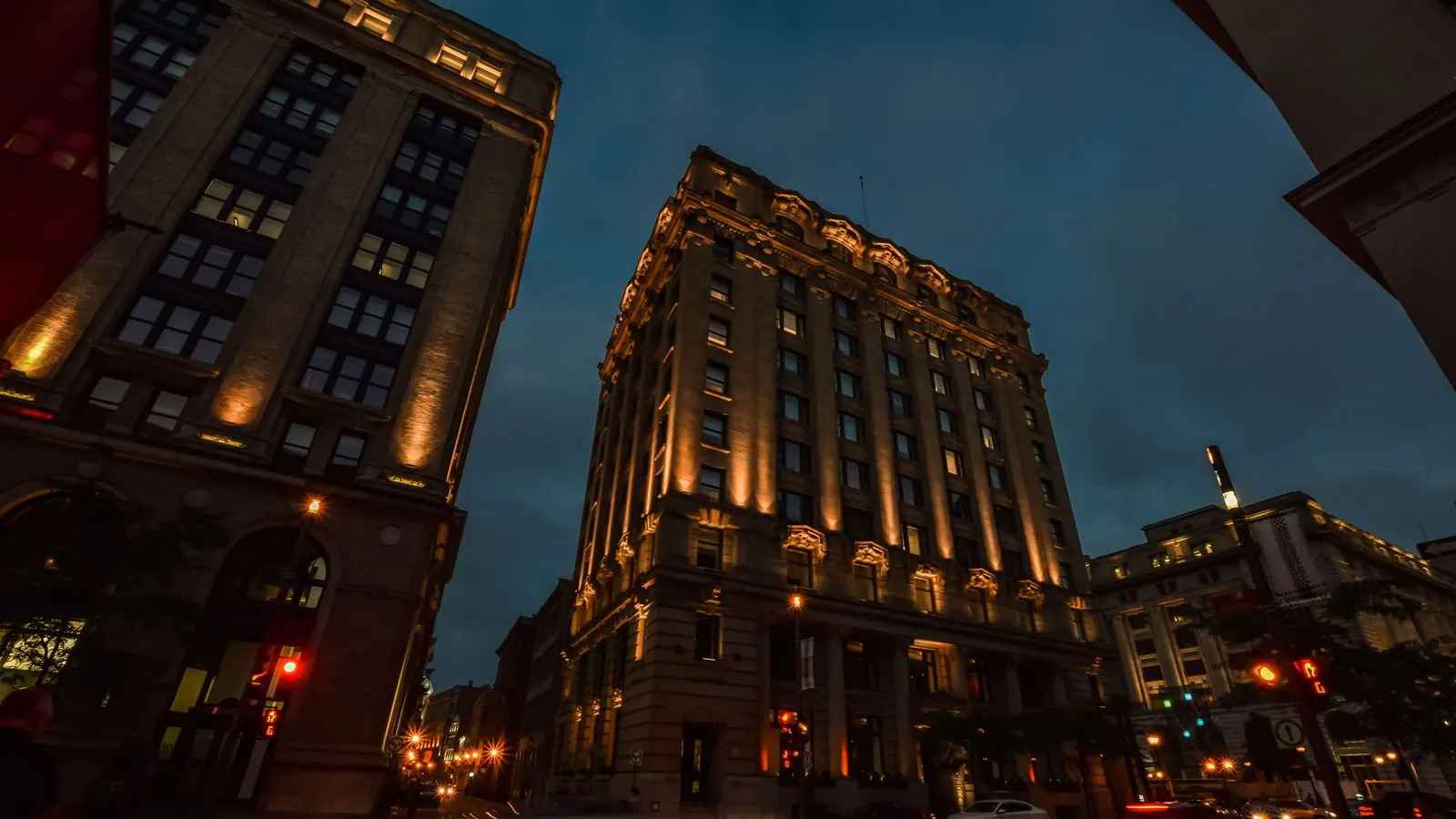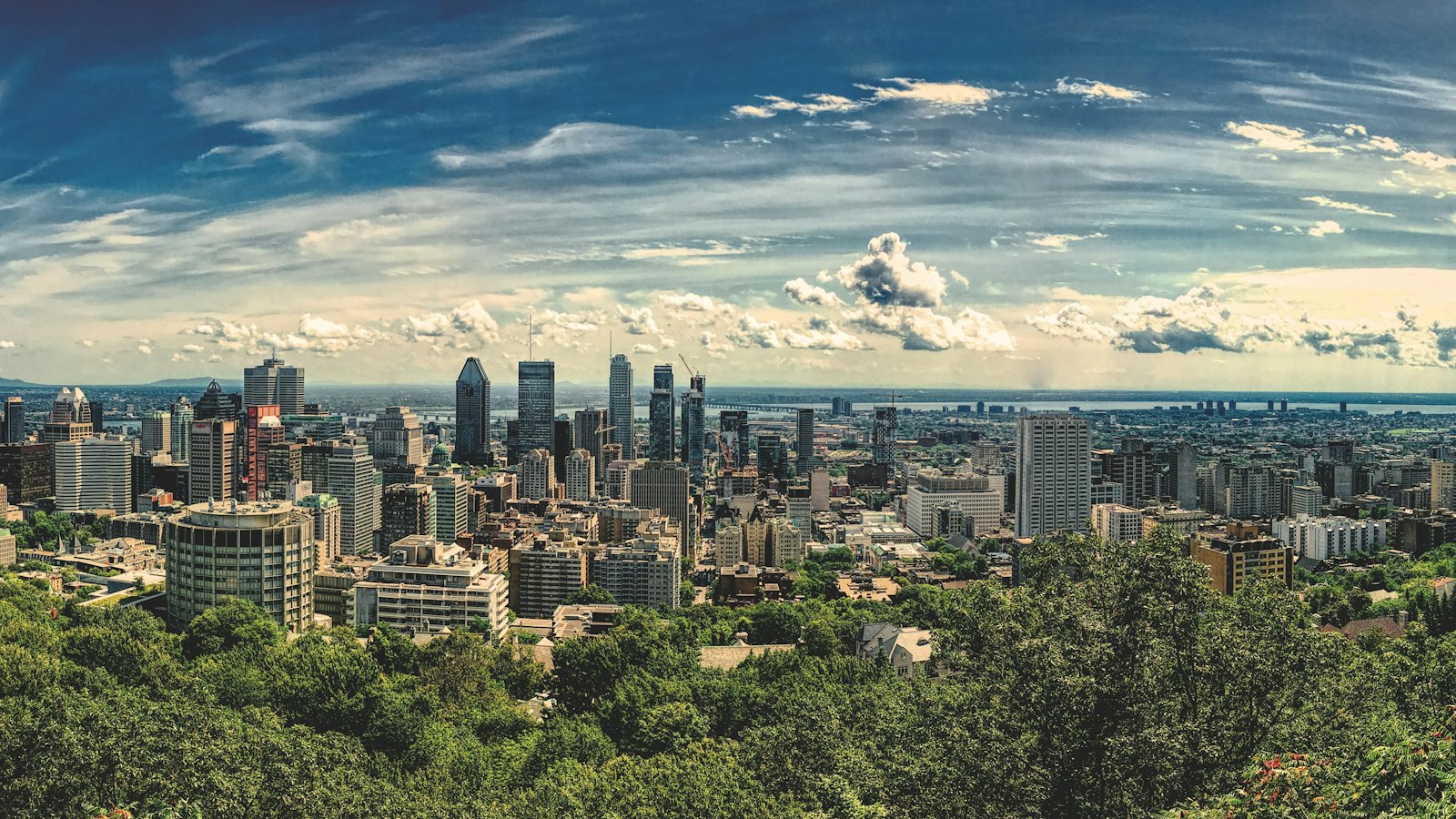











Toronto to Montreal by private car is about 540 kilometres on Highway 401 east and Quebec's Autoroute 20, and takes five to six hours door to door with one short stop. From Pearson, a business sedan plans at $1,275–1,470 and an executive SUV at $1,630–1,880 before HST, fixed and including the chauffeur's drive home. It suits families, groups and heavy luggage best.
Most people travelling between Toronto and Montreal take the train or a short flight, and for a solo traveller with a carry-on that is usually the right call. The private car earns its place on a different kind of trip: a family moving a student into residence, four colleagues who want to work on the way, a grandmother who should not be hauling a suitcase through Union Station, or anyone whose real start and end points are a driveway in Oakville and a hotel in Old Montreal rather than two downtown stations.
This is how the drive actually goes, what it costs, and when we would tell you to take VIA instead.
How long is the drive from Toronto to Montreal?
Plan on five to six hours from a central Toronto address to downtown Montreal, including one comfort stop. The route is simple: Highway 401 east through Durham Region, past Port Hope, Belleville and Kingston, then along the St. Lawrence through Brockville and Cornwall to the Quebec line, where the 401 becomes Autoroute 20 for the final run onto the island of Montreal. Roughly 540 kilometres, almost all of it divided highway.
The slow parts are at the two ends. Leaving Toronto, the 401 through Scarborough and Pickering is heavy from about 6:30 to 9:30 a.m. and again after 3 p.m. Arriving in Montreal, the approaches through the West Island and the Turcot interchange can add 30 to 45 minutes at rush hour, and the city is known for its construction season. A 9:30 a.m. departure that avoids both peaks is the sweet spot for most trips. In winter, the 401 east of Kingston can catch snow squalls; dispatch checks Ontario 511 the night before and will suggest moving the pickup if the forecast is poor.
Car, train or plane?
Each option wins in a particular situation. Here is how they compare for a trip from a Toronto home to a Montreal hotel.
| Option | Door to door, realistic | Best for | Watch out for |
|---|---|---|---|
| Private car | 5 to 6 hours | Families, groups of 3 to 14, lots of luggage, elderly travellers, door-to-door addresses | Highest single fare; rush hour at either end |
| VIA Rail | About 5 to 6 hours including getting to and from stations | Solo travellers and couples, working on the train, downtown to downtown | Luggage on stairs and platforms, taxis at both ends |
| Flight | About 3.5 to 4.5 hours including airport time | Speed for one or two people with light bags | Security, weather delays, checked-bag fees |
| Driving yourself | 5 to 6 hours plus parking | Travellers who want the car in Montreal | Fatigue, Montreal parking and traffic |
VIA Rail is a good service on this corridor, and our post on VIA Rail versus flying to Montreal goes into the timings. Where the car pulls ahead is the per-person maths for a group and the absence of transfers: nobody carries bags between a taxi, a platform and another taxi.
What does it cost, and what is included?
From Pearson, the planning fare to Montreal is $1,275–1,470 in a business sedan, $1,630–1,880 in an executive SUV or luxury minivan, before HST. The reservation engine quotes the exact figure for your pickup and drop-off addresses, and the price you confirm is the price you pay. It includes the chauffeur, the vehicle, fuel, any 407 ETR tolls used on the way out of the GTA, flight tracking if the trip starts at the airport, gratuity, and the chauffeur's return to Toronto. Nothing is metered and there is no surcharge for weather or traffic.
Split four ways in an SUV, the fare starts to look reasonable against four rail tickets plus taxis at both ends, and it is often less stressful than four people each arranging their own way to a station. Our explainer on what a flat-rate fare includes breaks down each line, and the rates page lists planning fares for every route we run.
Where does the car stop on the way?
On a five-hour drive, a comfort stop is part of planning, not a favour. Most chauffeurs break the trip near Kingston, roughly halfway, at one of the ONroute service centres beside the 401, where there are washrooms, coffee and fuel within a few metres of the highway. Fifteen or twenty minutes keeps everyone comfortable and the chauffeur fresh.
A detour to an address is different. Lunch in downtown Kingston, collecting a colleague in Brockville or dropping something at a cottage near Gananoque is an added stop, so add it when you book and the fare and pickup time will reflect it. Telling us in advance is always better than deciding at Belleville.
Choosing the vehicle
A business sedan carries three passengers and three large cases and suits a couple or a solo executive. An executive SUV or luxury minivan takes six passengers and six cases, which is the usual choice for a family or a small team. An executive Sprinter seats fourteen with fourteen cases and turns a corporate offsite or a wedding party into a single booking. If you are moving a student with boxes, a desk lamp and a winter coat, count all of it; our guide to choosing between a sedan, SUV or Sprinter explains how to match the vehicle to the load, and the fleet page shows each one.
A worked example: moving a student to Montreal
A family in North York is taking their daughter to start university in Montreal in late August: two parents, the student, four large suitcases, two boxes and a duffel bag. They book an executive SUV for 9:30 a.m. on a Thursday, missing the worst of the 401 and arriving before Montreal's evening rush.
The chauffeur loads the boxes first, keeps the student's documents bag in the cabin, and heads east. They stop at a service centre near Kingston just after noon, cross into Quebec a little after 2 p.m., and pull up outside the residence at about 3:15 p.m. on a day when half the city's students are moving in. The chauffeur unloads at the curb and the parents say goodbye in the car park rather than worrying about a drive home; they take the train back the next morning. The family pays one fixed fare, booked weeks in advance, with no surprise for the move-in traffic.
The Quebec side: language, roads and arrival
Road signs switch to French at the provincial line, but the route is no harder to follow and your chauffeur has done it before. The 401 and Autoroute 20 are toll-free, so there is nothing extra to pay on the standard route. For a hotel downtown or in Old Montreal, give the exact address and any loading instructions, because many older streets are narrow and one-way. For things to do once you arrive, Tourisme Montréal's site is the official guide.
If you are arriving in Montreal by air and heading the other way, the same car works in reverse: see our page on Montreal airport to Toronto car service. Business travellers sometimes combine the two, flying one way and driving the other with a stop in Kingston or Ottawa.
Going further: Quebec City and the Laurentians
Montreal is often the halfway point rather than the end. Quebec City is another two and a half to three hours east on Autoroute 20 or 40, and our post on Toronto to Quebec City with a driver explains when to break the trip overnight. For skiers, Mont-Tremblant is about an hour and a half north of Montreal; see the Mont-Tremblant ski transfer for how to fit skis and boots into the plan. Ottawa can be added as a stop on the way, and the Kingston page covers the halfway city if you want to start or finish there.
When we would suggest the train instead
If you are one person with a carry-on, live near Union Station and are going to a downtown Montreal hotel, VIA is cheaper and roughly as fast, and you can work at a table the whole way. If you are flexible, a fare sale on a short flight can beat everything on price. We would rather you book the right trip than the most expensive one, and dispatch will say so if you ask.
Booking Toronto to Montreal
Enter both addresses, the number of passengers and every bag in the reservation engine; the fixed fare appears before you confirm, with HST shown separately. The Toronto to Montreal route page and our long-distance car service overview cover vehicles and pickup rules. Plans can change: there is no charge to cancel more than 72 hours before pickup, and 10, 50 or 100 per cent applies inside 72, 48 or 24 hours. When you are ready, book the car and the confirmation follows straight away.