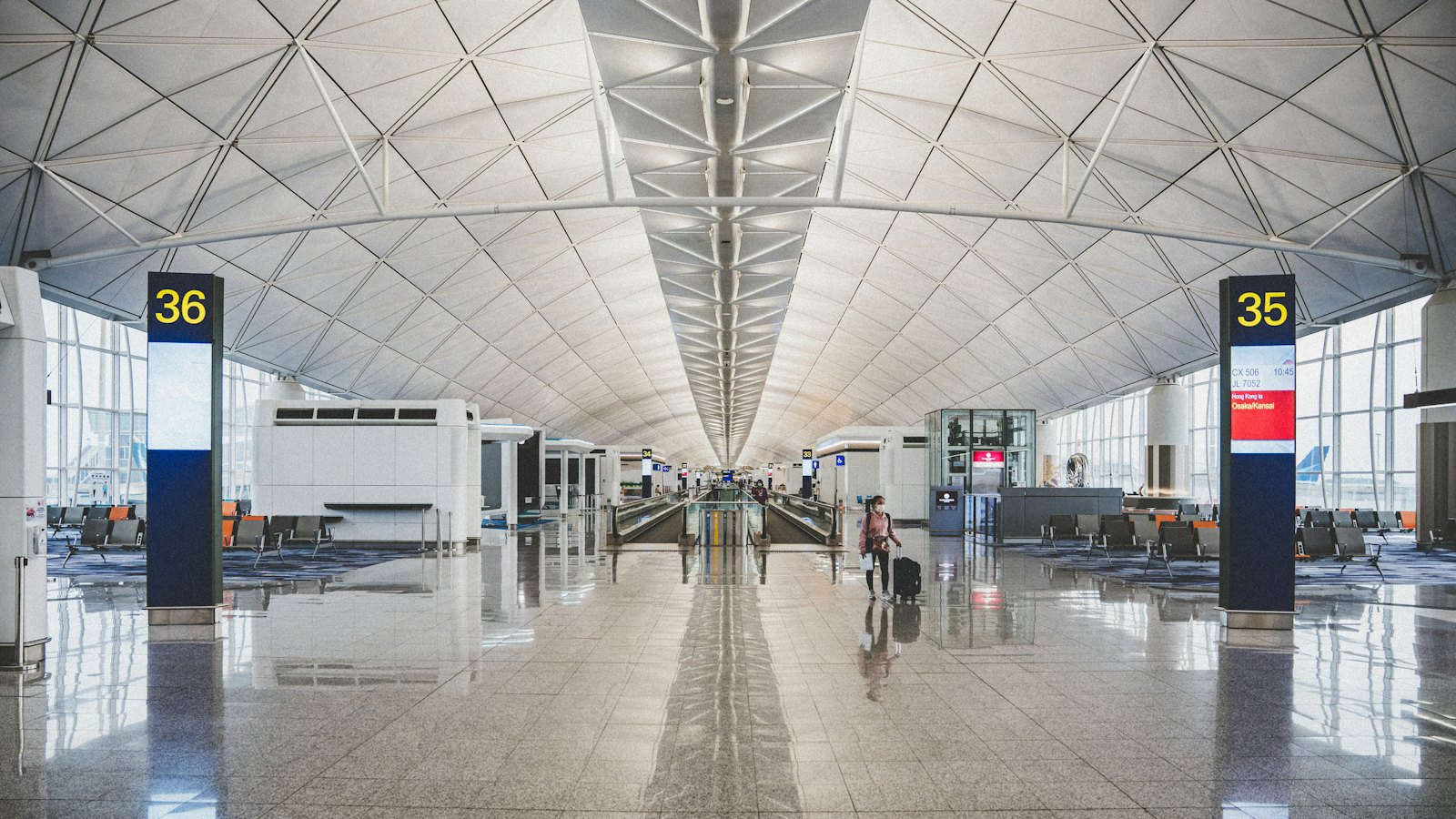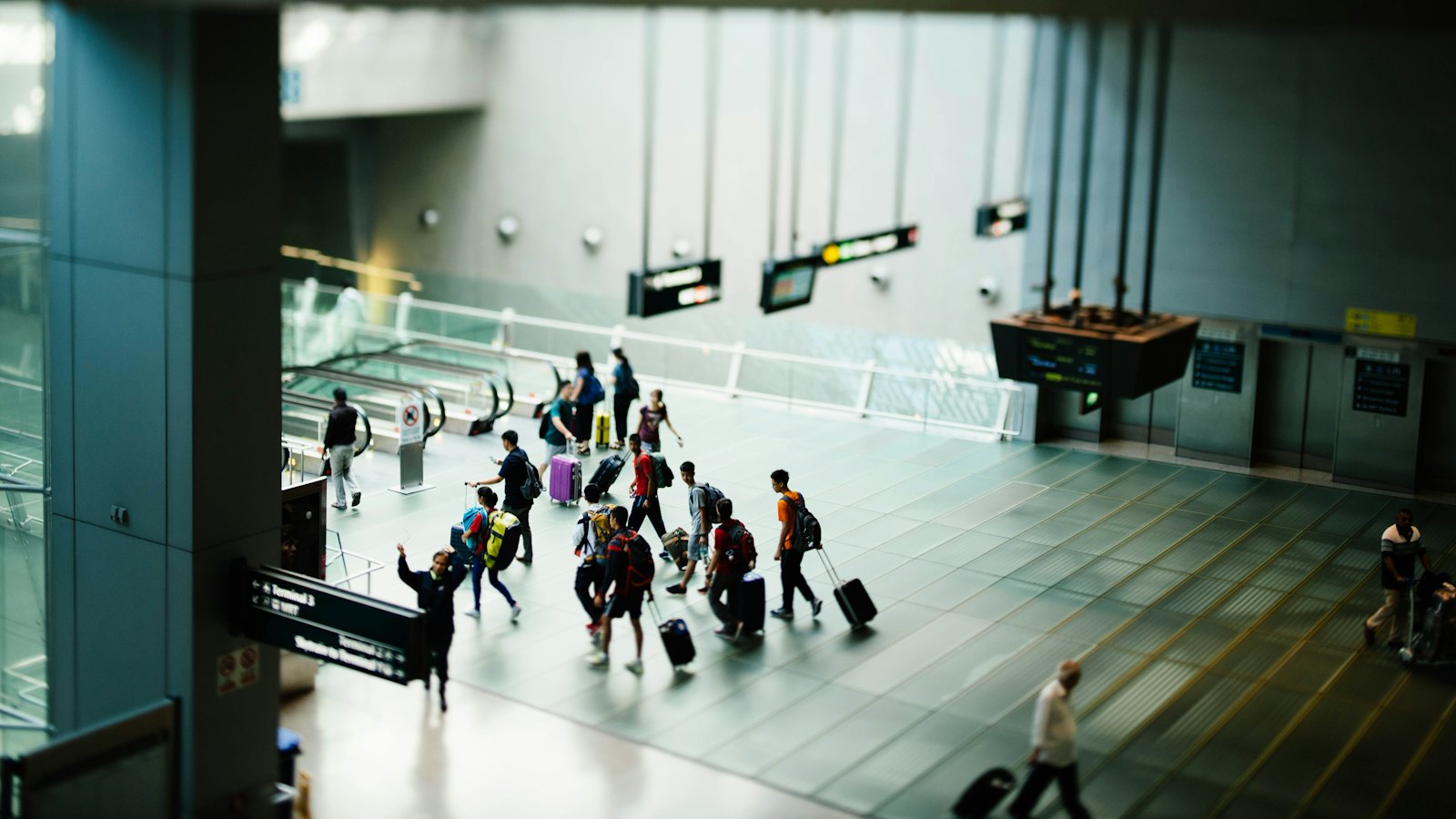











At Toronto Pearson you meet your chauffeur curbside, at the commercial pickup area of the terminal you land in, Terminal 1 or Terminal 3. Collect all your bags first, then text the chauffeur, who replies with the exact door and zone and brings the car round within minutes. If you would rather be met inside the arrivals hall with a name board, book the meet and greet add-on.
The question dispatch hears most from first-time passengers is not about price or vehicles. It is “where exactly do I go when I land?” Pearson is a large airport with two passenger terminals, several arrivals exits and curbs that are policed for loading only, so it is a fair question. The reassuring part is that the answer is the same routine at both terminals; only the signs and the walking distances change.
This guide sets out that routine, then covers what differs at Terminal 1 and Terminal 3, how long the chauffeur waits, when paying for meet and greet inside the hall makes sense, and what to do on the rare day you and your chauffeur cannot find each other.
The short answer, terminal by terminal
On a standard booking you meet your chauffeur curbside, at the commercial pickup area of the terminal you land in. You do not search for a driver in the arrivals hall, and the chauffeur does not sit at the public curb with the engine running. The car waits nearby, the chauffeur watches your flight, and when you message that you have your bags, the car comes to the pickup area and the chauffeur texts you the exact door and spot. At Terminal 1 and at Terminal 3 the principle is identical. If you would rather be met inside with a name board as you walk out, that is the meet and greet add-on described further down.
How the curbside pickup works, step by step
- Your confirmation arrives before the trip with the chauffeur's name and mobile number. Save it under a name you will recognise half asleep.
- The chauffeur follows your flight from departure, so an early or late landing changes their plan without you lifting a finger. Our post on how chauffeurs track your flight explains what they watch, and the one on delayed flights covers what happens when the schedule slips.
- When the plane reaches the gate, switch your phone on. A short message is usually waiting: who they are and that they are ready.
- Walk through immigration and customs if your flight came from outside Canada, then go to the baggage hall.
- Once every bag is on your trolley, text the chauffeur. That is the trigger, not the landing and not the moment you reach the customs line.
- The chauffeur replies with the door number and pickup zone and is usually there within a few minutes.
- Walk out, find the car, and let the chauffeur load the luggage.
The reason for waiting until you have bags is simple: arrivals curbs at Pearson are for loading, not waiting, and a car that pulls up while you are still at the carousel gets moved on. Texting at the right moment means you and the car reach the same spot at the same time.
Terminal 1 arrivals: what to look for
Terminal 1 is the larger building and handles Air Canada and most of its Star Alliance partners, so a great deal of long-haul traffic from Europe and Asia lands here. After customs you come out into the baggage area on the arrivals level. Follow the signs for ground transportation and commercial vehicle pickup rather than the taxi rank or the rideshare zone, which are separate. The UP Express station is also connected to Terminal 1, which is why you may see crowds heading for the train; that is not your route. When the chauffeur's message names a door number, walk along the inside of the building until you reach it rather than stepping out early and dragging bags along the curb in the cold.
Terminal 3 arrivals: what to look for
Terminal 3 serves WestJet and a long list of foreign carriers, including many transatlantic, Caribbean and Middle East flights. The building is more compact than Terminal 1, so the walk from the carousels to the doors is usually shorter. The routine is the same: collect bags, text, follow the signs for commercial vehicle pickup and match the door number in the reply. Because airlines occasionally switch terminals, check the terminal finder or the flight page on Toronto Pearson's site before you fly, and tell dispatch if your airline has moved. Our Terminal 1 vs Terminal 3 guide lays out the two buildings side by side.
Does it matter whether you land domestic, US or international?
It changes how long it takes you to reach the carousel, and therefore when you text. It does not change the meeting point. Domestic passengers walk from the gate to baggage with no checks. Passengers from US cities and from overseas go through Canadian border control first; the Canada Border Services Agency sets those rules, and queues vary by the hour. The included waiting time is set to match those realities.
| Arriving from | Steps before your bags | Included waiting from actual landing |
|---|---|---|
| Elsewhere in Canada | Gate to carousel, no checks | 30 minutes |
| United States | Border control, then baggage | 30 minutes |
| International, outside the US | Immigration, customs, then baggage | 60 minutes |
| Hotel or station pickup | Not applicable | 15 minutes |
Waiting beyond the included allowance is charged in 15-minute blocks, and dispatch tells you before it starts. The details, with examples, are in our post on waiting time charges.
When meet and greet inside the hall is worth it
Meet and greet is an add-on, with a planning figure of $150, in which the chauffeur parks, walks into the arrivals hall and waits at the exit with a name board. You do not text; you walk out and look for your name. It earns its cost on a first visit to Canada, for elderly parents travelling alone, for a guest whose phone will not work on landing, for a visitor whose host wants a visible welcome, and for anyone arriving with more luggage than one person can steer. A regular business traveller with a working phone rarely needs it. Our meet and greet service page explains how it is booked, and the post on name board etiquette covers what goes on the sign and what never does.
What to text, and when
Keep messages short and useful. On landing: “Landed, at the gate.” After a slow customs hall: “Through customs, waiting for bags.” With bags: “All bags, two adults, heading out.” If a suitcase is missing and you are queuing at the airline's baggage desk, say so straight away, because it changes the plan; our guide to lost luggage at Pearson walks through that queue. If your home number will not roam, WhatsApp over the terminal Wi-Fi works as well as a text, and the post on currency and SIM cards after landing covers getting a local connection.
If you cannot find each other
It happens occasionally, usually because someone is at the wrong door or the wrong terminal. Stay inside, where it is warm and you have signal, and do not wander along the curb. Send the chauffeur a photo of the nearest door number or sign. If you cannot reach the chauffeur, call dispatch on (877) 860-3388 or message on WhatsApp; dispatch can see where the car is and will guide you both to the same spot. What you should never do is accept a ride from someone who approaches you in the hall offering a car. Professional chauffeurs do not tout for passengers, and yours already knows your name.
Landed at the other terminal?
If your flight was handled at the other building, or a connection left you somewhere unexpected, you have two choices. Tell the chauffeur and wait inside while the car repositions, which takes a few minutes by road, or ride the Terminal Link train between Terminal 1 and Terminal 3 and meet at the original spot. The train is quick but means lifts and platforms with your bags, so with a heavy trolley it is easier to let the car move. Either way, message first so nobody waits in the wrong place.
A worked example: a sales director landing from Frankfurt
Priya is flying Frankfurt to Pearson, due at 3:40 p.m., and heading home to Oakville. The flight reaches Terminal 1 twenty minutes early, at 3:20. The chauffeur, already watching the flight, is parked nearby by 3:15. Priya clears immigration and customs by 3:55, her bags appear at 4:10, and she texts “two bags, ready.” The chauffeur replies with the door number, pulls into the commercial pickup area at 4:14, and by 4:20 they are on the 427 heading for the QEW. She used the full 60 minutes included from actual landing and nothing more, so there is no extra charge. A business sedan from Pearson to Oakville has a planning fare of $120–150 before HST; the Oakville page and the reservation engine give the exact figure, and our Frankfurt arrival guide covers that flight in more detail.
Booking your Pearson pickup
When you book, give the flight number rather than a landing time, the real number of passengers and bags, and whether you want curbside pickup or meet and greet. The reservation engine on the booking page shows the fixed all-in fare before you confirm, with HST shown separately, and the rates page lists planning fares from Pearson to every city we serve. For where every kind of ride meets you at the airport, from taxis to shuttles, read our Pearson pickup rules guide.