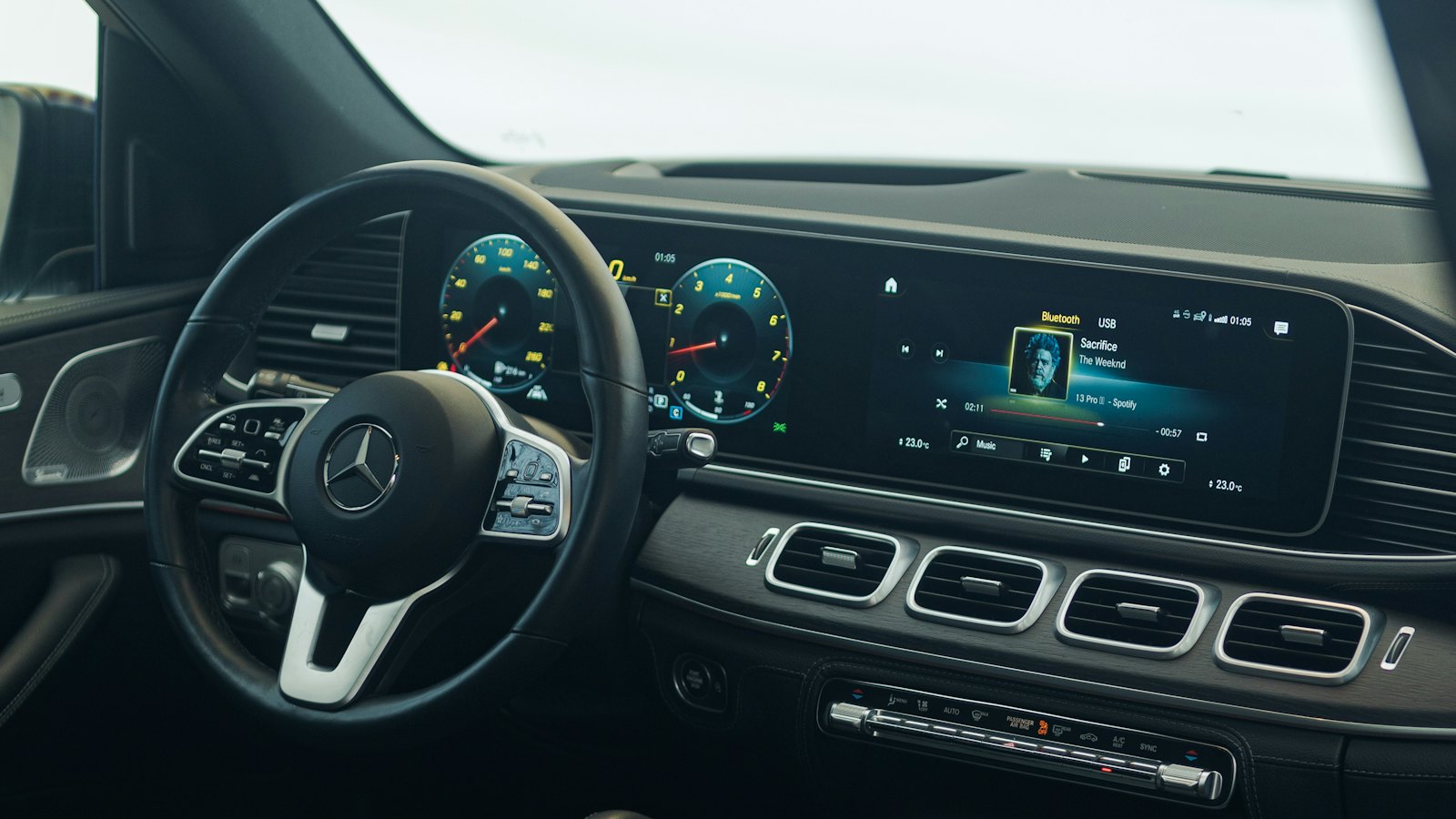











A discreet chauffeured trip means as few people as possible know who you are, where you are going and what you discussed. Tell dispatch at booking: no name board or an agreed name, curbside pickup by text instead of the arrivals hall, and nothing about your company in messages or booking notes. Chauffeurs treat anything overheard as confidential and never post or discuss who they drive.
Most of our passengers never think about privacy, and they do not need to. A sedan picks them up, the chauffeur says good morning, and the trip is forgotten by lunchtime. But some trips are different: a deal team arriving before an announcement, a public figure visiting family, a patient going to a specialist appointment, an executive whose travel is itself market-sensitive. For those, the details of the booking matter as much as the car.
This post explains what discretion actually involves on a chauffeured trip in Toronto, which details we need and which we do not, and the small choices that keep a trip unremarkable from the curb to the drop-off.
What discretion means on a chauffeured trip
Discretion is not a special vehicle or a secret service. It is a set of habits that reduce how much information exists about the trip and how many people see it. The chauffeur does not mention your name in public, does not repeat what is said in the car, does not photograph you or the car with you in it, and does not discuss the job with anyone outside dispatch. Dispatch keeps the booking to what is needed to run it. And you, the passenger, choose the least visible options at each step: where you are met, what appears on a sign, what goes in the booking notes. Almost all of it costs nothing.
What we need to know, and what we do not
To run a trip safely we need a pickup point, a destination, a time or a flight number, the number of passengers and bags, and a way to reach the traveller if plans change. We do not need the purpose of the trip, the names of the people you are meeting, or the project you are working on. Leave those out of the booking notes. If the chauffeur needs to confirm identity at pickup, agree with dispatch how you want to be addressed. The flight number is used only to follow the arrival, which our post on how chauffeurs track your flight describes in detail, and our privacy page sets out how booking data is handled.
| Detail | Who sees it | How to keep it minimal |
|---|---|---|
| Passenger name | Dispatch and the assigned chauffeur | Agree how you are addressed; skip the name board |
| Flight number | Dispatch, for tracking the landing | Needed only for airport pickups |
| Pickup and drop addresses | Dispatch and the chauffeur | Use a building entrance or hotel rather than a home if you prefer |
| Company or project | Nobody, unless you add it | Keep it out of notes; use a cost code for billing |
| Conversations in the car | The chauffeur, unavoidably | Treated as confidential; sensitive calls can wait for the hotel |
| Receipt | You and whoever you send it to | Shows fare, add-ons and HST, not the purpose of the trip |
Name boards, logos and the arrivals hall
A name board in the Pearson arrivals hall is the most visible moment of any trip. Meet and greet inside the hall is a paid add-on, planning figure $150, and it is the right choice for a first-time visitor or an elderly parent. For a discreet arrival it is often the wrong one. The quieter option is the standard curbside pickup: you clear customs, collect your bags, text the chauffeur, and walk out to the pre-arranged commercial pickup area where the car is waiting. If you do want a board, it can carry an agreed word or a first name only, and never a company logo. Our post on name board etiquette goes through what should and should not be written, and meet and greet explains the service itself.

Conversations in the back seat
A sedan has no partition, so the chauffeur will hear phone calls. Chauffeurs are trained to treat what they overhear as confidential and to stay out of the conversation unless you speak to them. They do not take notes, and they do not ask about your business. That said, honesty is part of discretion: if a call involves information that would move a share price, the most private place for it is a closed room, not a car. Some clients take the sensitive call before leaving the hotel and use the drive for email. For a small team that wants to talk freely together, an executive SUV gives more distance from the front seat than a sedan does.
Phones, Bluetooth and papers left behind
Two small habits protect more information than any policy. First, think before pairing your phone with a car's Bluetooth to play music or take calls: many cars keep a copy of the contact list and recent calls after the phone disconnects. Use your own earphones or a cable charger instead. Second, papers and devices left in the car are the most common privacy failure of all. Chauffeurs check the cabin at every drop, and anything found is returned to the passenger who booked, not handed to whoever asks. If you realise a folder is missing, call dispatch at once on (877) 860-3388.
Receipts, accounts and who sees the itinerary
Receipts show the fare, any add-ons and HST separately; they do not describe what the trip was for. On a corporate account, bookings are invoiced monthly after approval, and the invoice can carry a cost centre or project code instead of a descriptive note. Choose a code that means nothing outside your finance team. If your travel desk books for several executives, ask who on your side can see the full itinerary. Our post on corporate accounts and monthly billing explains how bookers, approvers and travellers fit together.
Arriving without being noticed
The terminal is not the only place where a car gets attention. A drop at a busy hotel lobby or the front of a Bay Street tower is seen by doormen, concierges and anyone waiting for a cab. Ask for a side or parking-level entrance when the building has one, and tell dispatch the exact door. For travellers flying privately, a chauffeur waiting at the Pearson FBO avoids the public terminal entirely. Billy Bishop is small and close to downtown, which is useful but also very public; check the layout on Billy Bishop's site and weigh it against Pearson with our post on Billy Bishop or Pearson for a business trip.
Public figures and security teams
When a client travels with a protection detail or a security lead, the chauffeur works to their plan: pickup points, timing, route and who sits where. Dispatch coordinates in advance so that the security lead has the car details, the chauffeur's name and a direct line, and nothing is decided at the curb. Our VIP and executive protection page describes that coordination, and delegation transportation covers official visits with several cars. Where the vehicle itself is a statement, such as a Rolls-Royce or a stretch limousine from a partner fleet, a coordinator confirms the details in writing before the day.
A worked example: a confidential deal visit
A general counsel from New York lands at Pearson Terminal 1 on a Thursday afternoon, two days before an announcement. Her assistant books a first-class sedan to a Bay Street hotel, planning fare $295–360 before HST, with a note: no board, first name only, no company references. Because it is a US flight, 30 minutes of waiting are included from landing. She clears customs, texts the chauffeur from the baggage hall and walks out to the commercial pickup area; nobody in the arrivals hall has seen her name. The drop is at the hotel's parking-level entrance. The next morning a four-hour hourly booking takes her between two law offices and back, and the receipts carry the firm's matter code and nothing else. You can follow Pearson's layout on Toronto Pearson's site, and our guide to where to meet your chauffeur at Pearson shows the pickup points terminal by terminal.
Social media, photos and the chauffeur
A chauffeur will never post, share or discuss who they drive, whether the passenger is a chief executive, a musician playing the Scotiabank Arena or a family on the way to a funeral. They do not take photos of passengers, they do not confirm a booking to anyone who calls asking whether a person is in the car, and they do not talk about past clients with new ones. The same applies to dispatch. If someone contacts us claiming to be your colleague and asking for your pickup time, the answer is a polite refusal and a call to the person who booked.
Setting up a confidential booking
- Book through the reservation engine on our booking page or through your travel desk, with only the details needed to run the trip.
- Choose curbside pickup by text, or a board with an agreed word only.
- Give the exact door for each drop, including side or parking entrances.
- Use a cost code, not a project name, on corporate bookings.
- Tell dispatch about any security lead who needs the car details.
- Check the seat before you step out.
For planning, a business sedan from Pearson to downtown is $130–160 before HST; the reservation engine quotes the exact fixed fare, with gratuity, tolls and airport fees included. For a longer day of meetings, our post on a roadshow day with a chauffeur shows how one car and one chauffeur can carry the whole schedule.